In a crowded marketplace, a powerful brand isn’t a luxury—it’s your most valuable asset. For small businesses, branding is the art of shaping perception, earning trust, and creating a loyal customer base that chooses you over bigger, more established competitors. It’s the silent ambassador that sells your value long before a customer clicks “buy.” A magnetic brand makes your business memorable, forging a genuine connection with your audience.
This article cuts through the noise to deliver 10 actionable small business branding tips. Each strategy is designed for immediate implementation, packed with practical examples to guide you. A critical part of this is making your brand physically visible; to truly stand out and capture attention, innovative signage is key. Explore these creative small business sign ideas to maximize your local impact.
From defining the core promise that makes you different to leveraging social proof that builds unbreakable trust, these strategies provide a complete framework. Follow this guide to build a brand that not only gets noticed but becomes the go-to choice in your market.
Get In Touch
1. Nail Your Unique Value Proposition (UVP)
Before you spend a dime on a logo or a social media ad, you must answer one question: Why should a customer choose you? Your Unique Value Proposition (UVP) is the answer. It’s a clear, powerful statement that articulates the specific benefit you deliver, the problem you solve, and why you’re the superior choice. This isn’t just a tagline; it’s the foundation of your entire brand.
A weak UVP claims “high-quality service.” A killer UVP makes a concrete promise. TOMS Shoes didn’t just sell footwear; they built a brand on the unforgettable “One for One” model. Dollar Shave Club didn’t promise a good shave; they promised “a great shave for a few bucks a month,” directly attacking the pain point of expensive retail razors.
How to Turn This Into Action
To craft a UVP that converts, you must get specific and think like your customer. What do they really want? For a step-by-step guide on crystallizing what makes your business irresistible, see this article on creating a compelling value proposition.
- Interview Your Best Customers: Don’t guess. Ask them point-blank: “Why did you choose us over everyone else?” and “What specific problem did we solve for you?”
- Spy on Your Competitors: Analyze their messaging. Where are the gaps? What promises aren’t they making that you can own?
- Be Specific and Credible: Don’t say “fast shipping.” Promise “free 2-day shipping on all orders.” Then, make sure you can deliver on that promise, every single time.
Your UVP must be front and center on your website, in your ads, and in every customer conversation. It’s the compass that guides every branding decision you make.
2. Create a Consistent and Memorable Visual Identity
Once your UVP is locked in, it’s time to bring it to life visually. A consistent visual identity—your logo, color palette, typography, and imagery—translates your core message into a recognizable look and feel. When applied relentlessly across every touchpoint, this visual system makes your brand instantly familiar, builds customer trust, and projects a polished, professional image that commands respect.

Think of the brands you know. McDonald’s golden arches and red-and-yellow color scheme are unmistakable. Apple’s clean, minimalist aesthetic communicates sophistication without a single word. This level of instant recognition isn’t just for billion-dollar corporations; it’s a critical advantage for any small business fighting to get noticed.
How to Turn This Into Action
The secret to a powerful visual brand is consistency enforced by a system. Your brand style guide is your rulebook, ensuring that every piece of content created for your business follows the same visual DNA. To understand how colors can shape perception and drive action, dive into the principles of color psychology.
- Build Your Brand Style Guide: This document is non-negotiable. It must detail your logo usage (and misuse), official color palette (with hex codes), font hierarchy, and guidelines for photography.
- Invest in Professional Design: DIY tools are tempting, but a professional designer doesn’t just make things pretty; they create a strategic visual system that reflects your brand’s values and helps you achieve your business goals.
- Be Consistent Everywhere: Apply your visual identity ruthlessly across your website, social media profiles, email newsletters, business cards, and even your physical packaging.
- Test Across All Media: Before you commit, make sure your logo and colors look just as good on a tiny mobile screen as they do on a large printed banner.
3. Craft a Compelling Brand Story
People don’t buy what you do; they buy why you do it. Your brand story is the “why.” It’s the narrative that explains your origins, your mission, and your core values, transforming your business from a faceless company into a relatable, human brand. This is one of the most powerful small business branding tips because an emotional connection creates customers for life.
A great brand story makes you unforgettable. Patagonia isn’t just an outdoor gear company; its story is woven into a deep commitment to environmental activism, attracting customers who share those values. The story of Sara Blakely launching Spanx after facing countless rejections doesn’t just sell shapewear; it inspires and creates a powerful bond with her audience.

How to Turn This Into Action
To craft a story that resonates, be authentic and human. This narrative should be the centerpiece of your “About Us” page and a consistent thread in your social media content and marketing campaigns. To understand the science behind why stories are so persuasive, explore the concept of narrative transportation theory.
- Be Authentic and Transparent: Share the real journey—the struggles, the breakthroughs, the “aha” moment. Authenticity builds trust far more effectively than a polished, perfect facade.
- Structure Your Narrative: Use a classic story arc: introduce a problem (your customers’ pain point), explain your quest to find a solution, and reveal how your business delivers that successful outcome.
- Make It Human: Focus on the people, the passion, and the purpose behind the business. That’s what creates an emotional hook.
- Weave It In Everywhere: Ensure your brand story is a consistent theme across all customer touchpoints, from your website copy to how you introduce yourself at networking events.
4. Define a Distinct Brand Voice and Tone
If your visual identity is how your brand looks, your voice and tone are how it sounds. This combination of language, personality, and communication style makes your brand recognizable and relatable in every piece of writing. Your brand voice is the consistent personality (e.g., expert, quirky, inspiring), while your tone adapts to the context (e.g., a celebratory social media post vs. a serious customer service email).
A well-defined voice turns a faceless business into a personality people want to engage with. For example, the project management tool Slack uses a conversational, witty voice with emojis to feel approachable and fun. In stark contrast, Nike’s voice is consistently inspirational and empowering, using action-oriented language to motivate its audience. This linguistic consistency is a crucial small business branding tip because it creates a predictable and trustworthy customer experience.
How to Turn This Into Action
To define your unique voice, create a simple guide that outlines your brand’s personality with clear examples. This ensures everyone, from your marketing intern to your customer support lead, communicates as a unified brand. For a deeper look at how language style affects perception, you can review this overview of communication accommodation theory.
- Choose Your Personality Adjectives: Pick 3-5 core adjectives that describe your brand. Are you “Professional, Authoritative, Helpful” or “Playful, Witty, Casual”?
- Create a “This, Not That” Chart: For each adjective, clarify the boundaries. For example: “We are witty, but not sarcastic.” or “We are confident, but not arrogant.”
- Provide Concrete Examples: Show clear “do” and “don’t” examples for different channels, like social media captions, email subject lines, and website headlines.
- Train Your Team: Make sure every single person who writes on behalf of your brand understands and can apply these guidelines.
Get In Touch
5. Build and Enforce Your Brand Guidelines
To protect your brand’s integrity as you grow, you need a rulebook. Strong brand guidelines are a comprehensive document that dictates exactly how your brand’s visual and verbal elements should be used. It’s the single source of truth for your team, freelancers, and partners, ensuring every logo placement, color choice, and turn of phrase is consistent and on-brand.
Clear guidelines prevent brand dilution and create a seamless customer experience. Mailchimp, for example, provides public guidelines that not only specify logo usage but also define their brand voice, from playful to formal. This eliminates guesswork and empowers anyone representing the brand to do so perfectly. For scaling businesses, this is one of the most critical small business branding tips.
How to Turn This Into Action
Your brand guidelines don’t need to be a 100-page novel on day one. Start with the essentials and let the document evolve with your business. For a complete checklist of what to include, see this detailed explanation on brand identity.
- Document Core Visuals: At a minimum, specify your logo variations, exact color codes (HEX, RGB, CMYK), and your typography hierarchy (fonts and sizes for headlines, subheadings, and body text).
- Define Your Brand Voice: Include the voice and tone guidelines from the previous step. Add a list of on-brand phrases and, just as importantly, terms to avoid.
- Show, Don’t Just Tell: Provide clear visual examples of correct and incorrect usage, like how to place your logo on different colored backgrounds or the right way to style an image.
- Make It Accessible: Store your guidelines in a shared, easy-to-find location like Google Drive or a dedicated page on your company intranet. Ensure everyone knows where it is and is expected to use it.
6. Identify and Obsess Over Your Ideal Customer
You can’t build a brand that resonates with everyone. Trying to do so creates a brand that resonates with no one. The most successful brands have a laser-focus on their Ideal Customer Profile (ICP). This means creating a detailed, almost obsessive picture of your perfect customer—their demographics, lifestyle, pain points, and behaviors. This is one of the most vital small business branding tips because it allows you to tailor every message, product, and experience to delight the people who matter most.
A well-defined ICP is specific. Peloton doesn’t just target “people who want to get fit.” It targets affluent professionals, aged 25-45, who value convenience, data, and a sense of community. Similarly, Basecamp focuses its messaging on small business owners overwhelmed by complex project management tools, promising simplicity and sanity.
How to Turn This Into Action
To build a brand that feels like it was made just for them, you have to know them inside and out. Start by creating 2-4 detailed buyer personas. For a practical walkthrough, explore this guide on how to create detailed buyer personas.
- Analyze Your Best Customers: Look at your existing customer data. Who are your most profitable, loyal, and satisfied customers? Find the common threads.
- Conduct Customer Interviews: Talk to them. Ask about their motivations, their biggest challenges, and the exact words they use to describe their needs.
- Study Your Competitors’ Audience: See who your competitors are targeting. Are there underserved segments or frustrations you can address to win customers over?
These personas are living documents. Revisit them quarterly to ensure your branding remains perfectly aligned with the people you exist to serve.
7. Dominate on the Right Social Media Platforms
A strategic social media presence is non-negotiable for modern branding. But “strategic” doesn’t mean being on every platform. It means choosing the right channels—where your ideal customers actually spend their time—and showing up consistently with value. Done right, social media builds brand awareness, fosters direct customer relationships, and creates a powerful community around your brand.
Effectiveness is about depth, not breadth. Wendy’s has built a legendary brand on Twitter with a witty, sarcastic voice that its audience loves. GoPro dominates Instagram and YouTube by turning its customers’ adventures into thrilling user-generated content, making them the heroes of the brand story.
How to Turn This Into Action
The goal is to transform social media from a megaphone into a conversation. Instead of spreading yourself thin, focus your energy on 2-3 key platforms where your ideal customers are most engaged. For advanced techniques on fostering interaction, check out these social media engagement strategies.
- Choose Platforms Strategically: Are you a B2B service? LinkedIn is likely your best bet. A highly visual product? Go all-in on Instagram and Pinterest.
- Maintain a Consistent Cadence: Use a content calendar to plan your posts 4-6 weeks out. A steady stream of high-quality content (aim for 3-5 posts per week on primary channels) signals reliability and professionalism.
- Engage Like a Human: Don’t just post and ghost. Respond to comments and messages quickly, ideally within a few hours. Ask questions, run polls, and actively join conversations to build real relationships.
By focusing on genuine interaction and platform-native content, you can use social media to build a loyal tribe that champions your brand.
8. Create Valuable Content That Proves Your Expertise
Content marketing is the ultimate long-term branding play. It shifts the focus from “selling” to “serving.” By creating genuinely useful content—blog posts, videos, guides, or podcasts—you solve your audience’s problems, answer their questions, and establish your brand as the go-to authority in your niche. This is one of the most effective small business branding tips for building unshakeable trust and credibility.
Instead of interrupting people with ads, you attract them with expertise. HubSpot became a marketing behemoth by offering a massive library of free marketing resources and courses. Buffer built its brand by publishing transparent, data-backed social media tips on its blog. This approach doesn’t just build a brand; it generates organic leads, boosts your SEO, and creates a loyal audience that sees you as a trusted partner.
How to Turn This Into Action
The key to successful content marketing is to obsess over your customers’ pain points, not your own products. For more ways to leverage content to expand your brand’s footprint, explore these insights on building brand awareness through content marketing.
- Solve, Don’t Sell: Identify the top 10 questions your customers ask and create a piece of in-depth content to answer each one.
- Integrate SEO Naturally: Research the keywords your ideal customers are searching for and weave them into your content. This connects you with people who are actively looking for your expertise.
- Be Consistent: Create an editorial calendar and stick to it. Publishing valuable content regularly builds audience anticipation and signals to search engines that your site is a reliable source of information.
- Repurpose Everything: Get maximum mileage from your efforts. Turn a successful blog post into a video, an infographic, a webinar, and a series of social media posts.
9. Systematically Collect and Showcase Social Proof
One of the most persuasive small business branding tips is to let your happy customers do the selling for you. Social proof is the psychological phenomenon where people assume the actions of others reflect the correct behavior. By strategically collecting and showcasing customer testimonials, reviews, and case studies, you build powerful, third-party validation that crushes buyer hesitation and builds instant trust.
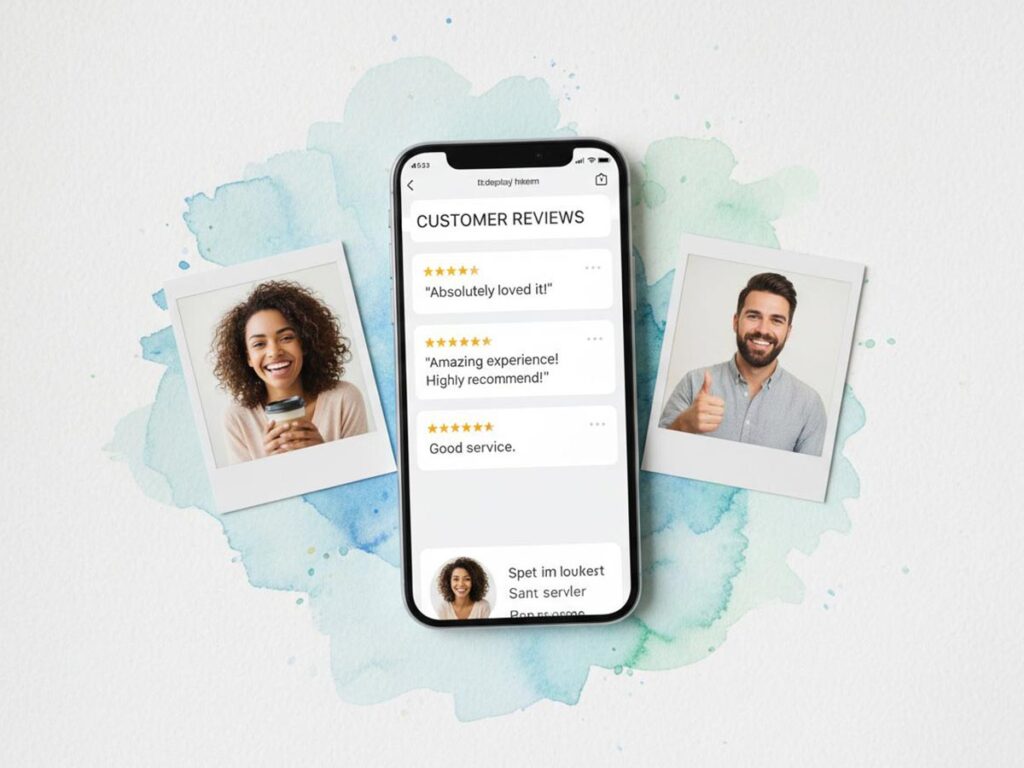
Effective social proof tells a story of transformation. Shopify doesn’t just show star ratings; it features detailed customer success stories on its homepage, demonstrating tangible business growth. A local contractor can show before-and-after photos with a client’s enthusiastic quote, providing undeniable proof of their value. This strategy turns satisfied customers into your most authentic and powerful sales force.
How to Turn This Into Action
To get powerful testimonials, you need a system. Don’t wait for them to come to you; proactively ask for feedback at the moment of peak customer happiness.
- Ask Specific Questions: Instead of a generic “Leave us a review,” ask targeted questions like, “What was your biggest hesitation before buying, and what has your experience been like since?” or “What’s the single biggest result you’ve seen?”
- Go for Video: Video testimonials are the gold standard. They are incredibly authentic and convey emotion in a way that text cannot. Offer a small incentive (like a gift card) for a 30-second video submission.
- Place It Strategically: Feature your best testimonials on high-stakes pages like your homepage, product pages, and especially near the “buy” button on your checkout page to overcome last-minute doubts.
- Add a Face to the Name: Whenever possible, include the customer’s full name, company (if B2B), and a photo. This dramatically increases credibility.
10. Actively Monitor and Manage Your Online Reputation
In today’s world, your brand isn’t what you say it is—it’s what Google says it is. Actively managing your online reputation involves tracking brand mentions, responding to every review (good and bad), and shaping the public conversation around your business. For a small business, a handful of negative reviews can cripple trust, making proactive reputation management an essential branding activity.
A strong online reputation is a powerful asset. Brands like Southwest Airlines excel at this by publicly and professionally responding to customer feedback, often turning a complaint into a demonstration of outstanding customer service. This shows potential customers that you listen, you care, and you stand behind your brand promise.
How to Turn This Into Action
Effective reputation management requires consistent monitoring and a clear response plan. The goal is to engage with feedback, resolve issues transparently, and use criticism as a tool for improvement. For legal and ethical best practices, the Federal Trade Commission provides clear guidelines on soliciting reviews.
- Set Up Alerts: Use free tools like Google Alerts to monitor mentions of your business name, products, and key employees. This gives you real-time intelligence.
- Respond to Everything, Fast: Aim to reply to all reviews within 24-48 hours. Thank positive reviewers. For negative reviews, acknowledge their frustration, apologize publicly, and offer to take the conversation offline to resolve the issue.
- Turn Criticism into Consulting: Don’t view negative reviews as an attack. See them as free, valuable feedback. If you see recurring complaints, it’s a clear signal you have an operational issue that needs fixing.
By actively managing your digital footprint, you protect your brand’s integrity and prove your commitment to customer satisfaction—the ultimate cornerstone of a great brand.
Get In Touch
10-Point Small Business Branding Comparison
| Item | Implementation Complexity 🔄 | Resource Requirements ⚡ | Expected Outcomes 📊 (Effectiveness ⭐) | Ideal Use Cases 💡 |
|---|---|---|---|---|
| Define Your Unique Value Proposition (UVP) | 🔄 Medium — market research and iteration required | ⚡ Moderate — time, customer interviews, possible consultant | 📊 Clear positioning and higher conversions; ⭐⭐⭐⭐ | 💡 New businesses, repositioning, marketing strategy foundation |
| Create a Consistent Visual Identity | 🔄 Medium‑High — design, testing, and asset creation | ⚡ High — professional design fees and production | 📊 Strong recognition and credibility; ⭐⭐⭐⭐ | 💡 Product launches, consumer brands, rebrands |
| Develop a Strong Brand Story | 🔄 Medium — storytelling craft and authenticity needed | ⚡ Low‑Moderate — time to craft and validate | 📊 Emotional connection and loyalty; ⭐⭐⭐⭐ | 💡 Mission-driven brands, storytelling-led marketing |
| Establish a Clear Brand Voice and Tone | 🔄 Medium — alignment and training across teams | ⚡ Moderate — workshops, documentation, training | 📊 Consistent engagement and recognizable personality; ⭐⭐⭐ | 💡 Content-heavy brands, customer support, social media |
| Build Strong Brand Guidelines and Documentation | 🔄 High — comprehensive standards and governance | ⚡ High — designer input, documentation time, updates | 📊 Consistent application and scalable branding; ⭐⭐⭐⭐ | 💡 Scaling companies, agencies, multi-channel brands |
| Identify and Target Your Ideal Customer Profile | 🔄 Medium — segmentation and primary research | ⚡ Moderate — analytics, interviews, tools | 📊 More efficient targeting and higher conversion; ⭐⭐⭐⭐ | 💡 Campaign planning, product-market fit, segmentation |
| Establish Consistent Presence on Social Media | 🔄 Medium — ongoing coordination and content cadence | ⚡ Moderate‑High — content creation and community management | 📊 Increased awareness and engagement; ⭐⭐⭐ | 💡 D2C, community building, brand awareness campaigns |
| Create Valuable Content That Demonstrates Expertise | 🔄 Medium‑High — strategy, production, SEO planning | ⚡ High — writers, producers, distribution time | 📊 Authority, SEO gains, lead generation over time; ⭐⭐⭐⭐ | 💡 B2B, education-focused brands, organic growth strategies |
| Implement Customer Testimonials and Social Proof | 🔄 Low — collection and placement workflows | ⚡ Low — outreach, basic tooling, display templates | 📊 Higher conversions and trust; ⭐⭐⭐⭐ | 💡 E‑commerce, service pages, landing pages |
| Monitor and Manage Your Online Reputation | 🔄 Medium — monitoring, response protocols, crisis plans | ⚡ Moderate — tools, dedicated time or agency | 📊 Early issue detection and trust protection; ⭐⭐⭐ | 💡 High-visibility brands, service industries, crisis-prone sectors |
From Strategy to Lasting Impression: Your Next Steps in Branding
The journey from a fledgling business to a memorable brand is built upon a foundation of deliberate strategy and consistent execution. The ten comprehensive tips detailed in this article provide a foundational roadmap, guiding you through the critical stages of brand development. From defining your Unique Value Proposition and crafting a compelling brand story to establishing a consistent visual identity and managing your online reputation, each element works in concert to shape public perception and foster customer loyalty.
These are not merely items on a checklist; they are interconnected pillars supporting your business’s identity. A strong brand story, for instance, is amplified by a consistent brand voice across social media. Similarly, customer testimonials gain credibility when presented within a professional visual framework. Mastering these small business branding tips is not just about aesthetics; it is a strategic imperative that directly influences customer trust, market differentiation, and long-term profitability.
Synthesizing Strategy into Action
To truly transform these insights into tangible results, your next steps should be focused and methodical. Avoid the temptation to tackle everything at once. Instead, prioritize based on your current business needs and resources.
- Conduct a Brand Audit: Begin by evaluating your current branding efforts against the principles discussed. Where are the inconsistencies? Is your messaging clear? Does your visual identity resonate with your Ideal Customer Profile? This internal review will highlight the most urgent areas for improvement.
- Prioritize a Keystone Project: Select one or two high-impact areas to focus on initially. For many businesses, this might mean formalizing their Brand Guidelines and Documentation to ensure consistency moving forward. For others, it could be a targeted campaign to Implement Customer Testimonials and Social Proof to build immediate credibility.
- Develop an Implementation Calendar: Create a realistic timeline for rolling out changes. For example, dedicate the first month to refining your brand voice and the second to creating a content calendar that reflects this new tone. This structured approach prevents overwhelm and ensures steady progress.
The Long-Term Value of a Cohesive Brand
Ultimately, building a powerful brand is an investment in your company’s future. A well-defined brand acts as your silent salesperson, working around the clock to communicate your value and build relationships with your audience. It simplifies marketing efforts, attracts top talent, and provides a framework for making sound business decisions. As you implement these small business branding tips, remember that your brand is a living entity. It must be nurtured, monitored, and adapted to remain relevant and resonant in an ever-changing marketplace. Your commitment to this ongoing process will be the single most significant factor in creating a brand that not only survives but thrives.
Ready to elevate your brand from concept to a powerful market presence? The team of experts at Galant Studios specializes in translating brand strategy into stunning web design, effective SEO, and compelling visual identities. Visit Galant Studios to discover how professional creative partnership can accelerate your growth and ensure every element of your brand works in perfect harmony.