To truly measure your SEO success, you need to look beyond vanity metrics. While top rankings and a flood of traffic feel good, they don’t pay the bills. The real story of your success is found in a blend of metrics that reveal your visibility, engagement, and most importantly, your conversions and revenue. These are the numbers that forge a direct link between your SEO work and tangible business outcomes.
Rethinking Your Framework for SEO Success

The old playbook of chasing traffic for traffic’s sake is finished. We’re now navigating a search landscape where AI-powered answers and zero-click searches are the norm. In this new reality, a spike in website visitors doesn’t automatically translate to business growth. It’s time to stop thinking like an SEO technician and start acting like a business strategist, focusing exclusively on metrics that prove real-world value.
This mindset shift means understanding that a dip in clicks isn’t always a catastrophe. For example, judging your SEO performance on organic clicks alone is becoming unreliable as new search features answer user questions directly on the results page. In fact, recent data shows that 13.14% of search queries now trigger AI Overviews, often eliminating the need for users to click through to a website at all. You can learn more about how local SEO metrics are changing.
Here’s a practical example: Imagine your impressions soar by 20% year-over-year. At the same time, organic clicks dip by 5%, but your revenue from organic search grows by a healthy 12%. From a business perspective, this is an undeniable win. It proves that impactful visibility and high-quality conversions matter far more than raw click counts.
The Four Pillars of Modern Measurement
To build a measurement framework that can withstand scrutiny, organize your key performance indicators (KPIs) into four distinct pillars. This structure helps you craft a complete and persuasive story of your SEO performance, from initial brand awareness all the way to bottom-line impact.
Each pillar logically builds upon the last, creating a clear narrative that connects search visibility directly to revenue. This approach provides a panoramic view of what’s working, what isn’t, and where your next opportunity lies.
Below is a breakdown of these four pillars. They provide a clear, tiered structure for evaluating performance, moving from high-level awareness metrics to the financial results that executives actually care about.
Get In Touch
The Four Pillars of Modern SEO Measurement
| Pillar | Primary Metrics | What It Tells You |
|---|---|---|
| Visibility | Impressions, Keyword Rankings, Share of Voice | How often your brand appears in front of the right audience in search results. |
| Engagement | Click-Through Rate (CTR), Time on Page, Bounce Rate | How users interact with your content once they find you and whether it resonates. |
| Conversions | Form Submissions, Goal Completions, Lead Generation | How effectively your organic traffic turns into valuable actions for the business. |
| Revenue | Attributed Sales, Return on Investment (ROI) | The ultimate financial impact of your SEO efforts, connecting performance to the bottom line. |
By organizing your reporting around these pillars, you shift the conversation from “how much traffic did we get?” to “how much business did we generate?”. This is the key to demonstrating the true value of SEO as a core marketing channel.
Using Keyword Rankings in a Modern Search Landscape
While the days of obsessing over a single #1 ranking are behind us, keyword positions remain a crucial diagnostic tool for any serious SEO strategy. The modern approach isn’t about the vanity of being on top; it’s about using ranking data to diagnose what’s working—and what isn’t—so you can make smarter, more profitable decisions.
The real goal is to track your visibility across a portfolio of valuable, high-intent keywords. A recent survey revealed that 43.9% of marketers still point to keyword rankings as their primary success metric, making it the most common KPI. This isn’t surprising when you consider the top organic result captures a massive 39.8% click-through rate—a number that plummets for lower positions. You can find more data like this in these key SEO statistics.
Shifting Focus from Position to SERP Ownership
Simply knowing you rank at position three for a keyword tells you very little. True insight comes from analyzing that ranking alongside your click-through rate (CTR) and, most importantly, your ownership of Search Engine Results Page (SERP) features.
Elements like Featured Snippets, ‘People Also Ask’ boxes, and video carousels completely reshape how users interact with the results, often siphoning attention away from traditional blue links.
Securing a prominent SERP feature from position two or three can easily drive more qualified traffic than a plain #1 ranking. It’s about owning the most valuable real estate on the page.
Here’s a practical example: A client’s main service page dropped from #1 to #3 for a major keyword. Panic set in until we looked closer. In that “drop,” they had captured the Featured Snippet at the very top of the page. Their ranking technically fell, but their visibility, clicks, and leads actually went up. It was a net win.
This scenario highlights a fundamental shift in how we should measure success. It’s not just about a number; it’s about commanding attention.
Using Rankings as a Strategic Guide
When you treat keyword rankings as a diagnostic tool, they become incredibly powerful. A sudden drop across a group of related keywords, for instance, is often the first sign of a technical problem or an algorithm update that hit your site. On the flip side, steady upward movement tells you that your content is hitting the mark.
This data should directly inform your next actions.
- Spot Content Gaps: Are competitors consistently outranking you for terms you should own? Analyze their content to see what they’re doing that you aren’t.
- Target SERP Features: Use your rank tracker to see which target keywords trigger features like ‘People Also Ask’ boxes, then create content specifically designed to capture them.
- Prioritize High-Intent Keywords: Funnel your resources toward keywords that signal a user is ready to take action. For more on this, check out our guide on finding low-competition keywords that actually convert.
By looking at ranking data through this wider, more strategic lens, you turn a simple metric into a powerful asset that guides you toward real business growth.
Get In Touch
Connecting Technical Health to Business Growth
Think of technical SEO as the foundation of a house. It may not be as glamorous as the interior design, but without a solid, well-built structure, everything else is at risk of collapse. While technical fixes can seem abstract, their impact on business goals is very real, and our job is to draw a direct line between the two.
You simply can’t afford to overlook your site’s underlying architecture. I’ve seen firsthand how a seemingly minor technical improvement can unleash a major impact on user experience and, ultimately, the bottom line. For example, shaving your Largest Contentful Paint (LCP) from a sluggish 4.1 seconds to a snappy 2.2 seconds doesn’t just make the page feel faster. It translates directly into lower bounce rates and a measurable increase in demo requests.
This is how you transform a technical conversation into a persuasive business case.
From Site Speed to Sales
To truly demonstrate the value of technical SEO, you must move beyond vague statements like “site speed improved.” The key is to connect a specific technical metric to a tangible business outcome. This approach provides the hard evidence needed to justify the time and resources invested in technical projects.
A fantastic place to start is with Google’s Core Web Vitals. These metrics are Google’s way of measuring the actual experience a user has on your page. The main three are:
- Largest Contentful Paint (LCP): Measures how quickly the main content loads. Aim for under 2.5 seconds.
- Interaction to Next Paint (INP): Measures how responsive the page is to user interactions. A good target is under 200 milliseconds.
- Cumulative Layout Shift (CLS): Measures the visual stability of the page as it loads. Your goal is a score below 0.1.
Improving these scores doesn’t just satisfy search engines; it creates a much better, less frustrating experience for your visitors, making them far more likely to stick around and convert. If you’re looking to go deeper, we’ve put together a comprehensive guide on website performance optimization techniques.
The link between a technically sound website and business results isn’t a theory; it’s provable with data. When metrics like Core Web Vitals and backlink health improve, we consistently see a measurable lift in revenue from organic search.
The diagram below shows how various SEO components, from Share of Voice to CTR, all work together to build a successful strategy.
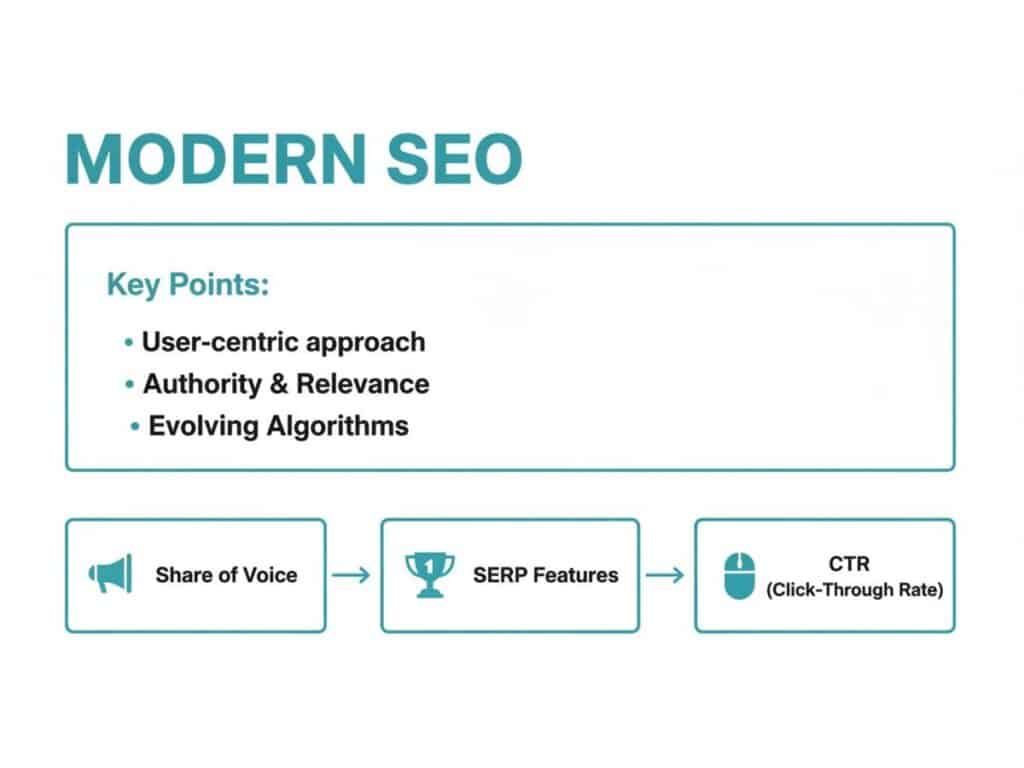
This illustrates a crucial point: success today isn’t about chasing a single metric. It’s about creating a holistic presence that dominates your niche in terms of visibility and engagement.
Technical SEO Metrics and Their Business Impact
To help you connect the dots, this table breaks down key technical metrics, the tools you can use to measure them, and the direct business impact you can expect from improving each one.
| Technical Metric | Tool for Measurement | Potential Business Impact |
|---|---|---|
| Crawl Errors | Google Search Console | Prevents lost sales from undiscovered or de-indexed product/service pages. |
| Core Web Vitals | PageSpeed Insights | Improves user experience, reduces bounce rates, and boosts conversion rates. |
| Broken Backlinks | Ahrefs or Semrush | Reclaims lost link equity, which strengthens domain authority and rankings. |
| Mobile-Friendliness | Mobile-Friendly Test | Captures a larger share of mobile traffic and improves lead generation. |
| HTTPS Status | Your Browser’s URL Bar | Builds user trust, protects data, and is a prerequisite for good rankings. According to U.S. government data, HTTPS is the required standard for federal websites, underscoring its importance. |
Tracking these metrics isn’t just technical housekeeping. It’s about ensuring every part of your digital presence is engineered to support your business objectives.
Another critical, yet often neglected, technical area is backlink health. Over time, links break—a natural part of the web’s lifecycle often called “link rot.” Some studies suggest that over 66% of backlinks can go dead over a few years. Regularly auditing your backlink profile and reclaiming those broken links is one of the most straightforward ways to recover lost authority and give your overall performance a lift.
Tracking the Metrics That Truly Matter
While strong visibility and a technically sound website are the foundation, this is where your SEO efforts start speaking the language of business value. We’re moving beyond foundational metrics like traffic and rankings to focus on what truly drives the business forward: conversions and revenue.
This is the critical shift from saying “we got more visitors” to proving “organic search generated a specific amount of new business.”
Getting a handle on these bottom-line metrics is how you demonstrate the true impact of your work. It’s the hard data you need to justify budgets, get stakeholders on your side, and prove that SEO isn’t just a marketing expense—it’s a primary engine for growth.
Setting Up Meaningful Conversion Goals
Before you can measure success, you must define what a “win” actually is for the business. Inside Google Analytics 4 (GA4), these wins are tracked as conversions. It’s vital to track not just the big-ticket actions (macro-conversions) but also the smaller, valuable steps a user takes along their journey (micro-conversions).
Adopting this dual approach gives you a much richer, more complete picture of how SEO is actually influencing user behavior.
- Macro-Conversions: These are the primary goals that directly impact the bottom line. Think of a completed purchase on an e-commerce site, a submitted “Request a Demo” form for a software company, or a tracked phone call for a local service business.
- Micro-Conversions: These are the smaller engagements that signal a user is moving down the right path. This could be anything from a newsletter signup to a whitepaper download or even just watching a product video. They aren’t the final sale, but they are crucial touchpoints for building trust and nurturing leads.
Practical example: A user might first find your brand through an organic search and download a free guide (a micro-conversion). A few weeks later, they might return to request a quote (a macro-conversion). By tracking both, you can see the full value organic search delivered in nurturing that customer from initial interest to a qualified lead.
Attributing Revenue to the Organic Channel
Once your conversion goals are in place, the next step is to tie them directly to revenue. This is, without a doubt, the most powerful way to articulate the value of SEO. For e-commerce sites, GA4 can track transaction data automatically. But for lead-gen businesses, you’ll need to assign a monetary value to each lead.
Here’s a practical example of calculating lead value: If 1 out of every 10 qualified leads becomes a customer, and the average customer lifetime value is $5,000, then each organic lead is effectively worth $500 to the business. This simple math transforms an SEO report from a list of metrics into a financial statement.
This approach allows you to report on SEO performance in the language executives understand best: dollars and cents. You can confidently walk into a meeting and say, “This month, our SEO efforts generated $15,000 in new sales pipeline,” providing a tangible, undeniable measure of your impact.
Ultimately, the goal is to understand how your efforts translate into business value, and you can learn more about How to Measure SEO Performance and Drive Growth from other experts in the field.
Get In Touch
Creating Actionable SEO Reports for Stakeholders

Let’s be honest: raw data rarely inspires action. Insightful stories do. The metrics we’ve covered are powerful, but their true value is unlocked only when you translate them into a clear narrative that stakeholders can understand and get behind. A strong SEO report doesn’t just present numbers; it celebrates wins, explains what the trends mean, and lays out a clear roadmap for what comes next.
The real key is tailoring your communication to the audience. Your C-suite wants a high-level summary of business impact, not a deep dive into keyword rankings. Your marketing team, on the other hand, needs that granular detail to actually execute the strategy. This is why moving beyond static spreadsheets is so critical for creating compelling, intuitive reports.
Visualizing Your SEO Performance
Modern data visualization tools are a game-changer for turning complex datasets into clean, easily digestible dashboards. They help you frame your performance against goals in a way that’s immediately understood, saving stakeholders from getting lost in endless rows of data.
Tools like Looker Studio (formerly Google Data Studio) are perfect for this. You can pull data from different sources—like Google Analytics and Search Console—into one interactive report. Centralizing your data like this is essential for building a holistic, top-to-bottom view of your SEO performance.
Here’s a practical reporting tip: The most effective reports go beyond showing what happened; they explain why it happened. Don’t just say, “Organic traffic increased by 15%.” Instead, frame it this way: “Our new content cluster on [Topic] drove a 15% increase in organic traffic, which directly resulted in 25 new qualified leads.”
This small shift in framing connects your team’s specific actions to tangible business results. It’s the single best way to secure buy-in and budget for future initiatives. If you want to dig deeper into this, you can learn more about how to track SEO performance in our detailed guide.
Structuring a High-Impact Monthly Report
To create a report that truly drives decision-making, it needs a logical flow that tells the whole story. I’ve found that a proven outline includes a quick summary for executives, a detailed analysis for the team, and a forward-looking action plan.
Here’s a simple yet effective structure that works well for monthly SEO reports:
- Executive Summary: Kick things off with a one-paragraph overview of the most important takeaways. This should be laser-focused on performance against top-level business goals, like organic revenue or lead generation.
- KPIs vs. Goals: Present a clear table or scorecard showing your primary metrics (organic traffic, conversion rate, keyword visibility) against the targets you set for the period. Use simple color-coding—green, yellow, red—to show status at a glance.
- Strategic Wins and Challenges: This is where you detail what worked and what didn’t. Celebrate your successes with specific examples. Be just as transparent about challenges, explaining the cause and your plan to address them.
- Action Plan for Next Month: Always conclude with a clear list of priorities for the upcoming month. This demonstrates that you’re proactive and directly links the insights from this report to your future strategy.
This structure ensures that every stakeholder, from the CEO down to the content writer, can quickly find the information they need and understand exactly how SEO is contributing to the company’s bottom line.
Get In Touch
Common Questions About Measuring SEO
Even with a solid framework, putting SEO measurement into practice often sparks new questions. It’s completely normal. Let’s tackle some of the most common hurdles you’ll likely face as you start to track your SEO success.
How Often Should I Be Reporting on SEO?
There’s no magic number here. The right reporting cadence depends entirely on your audience. Drowning your CEO in weekly keyword ranking shifts isn’t helpful, but your in-house team needs that granular detail to stay agile.
- For your SEO team or agency: Weekly check-ins are perfect. You’re looking at leading indicators—organic traffic fluctuations, keyword movements, and technical health alerts. This frequency allows the team to pivot quickly and jump on opportunities or problems as they arise.
- For executives and leadership: A monthly report usually hits the sweet spot. It smooths out the day-to-day noise and provides enough data to see real trends. Stick to the metrics that matter to the bottom line: organic revenue, lead volume, and C-suite KPIs.
- For big-picture planning: Use Quarterly Business Reviews (QBRs) for a strategic deep dive. This is where you connect the dots between your SEO performance and the company’s overarching business goals, setting the stage for the next quarter.
What Are the Best Tools for Measuring SEO?
No single tool provides the complete picture, so the best approach is to build a small but mighty toolkit. You’ll want to combine platforms that cover your site’s visibility in search, what users do once they get to your site, and what your competitors are doing.
For a well-rounded view, you absolutely need these three:
- Google Analytics 4 (GA4): This is your source of truth for on-site behavior. It tells you how much organic traffic you’re getting, how people engage with your content, and, most critically, how that traffic turns into conversions and revenue.
- Google Search Console (GSC): Think of GSC as a direct line to Google. It provides invaluable data on how Google sees your site, including impressions, clicks, CTR for your queries, and technical health signals like Core Web Vitals. The official Google Search Central is a great resource to learn more.
- Third-Party SEO Platforms: Tools like Semrush or Ahrefs give you a serious competitive edge. They provide the market intelligence that Google’s free tools don’t, such as advanced rank tracking, in-depth backlink analysis, and competitor insights.
How Do I Measure SEO for a Site That Doesn’t Sell Anything?
This is a classic B2B and service-based business challenge. Instead of tracking online sales, your measurement shifts to lead generation and signals of user interest. Your primary focus becomes macro-conversions—the big actions that directly feed the sales pipeline.
We’re talking about things like:
- Demo requests
- “Contact Us” form submissions
- Tracked phone calls from the website
But don’t stop there. It’s just as important to track micro-conversions. These are smaller steps a user takes that signal they’re moving in the right direction, like a whitepaper download or a webinar sign-up. The trick is to assign a value to these actions. For example, if you know 1 in every 10 demo requests becomes a customer worth $10,000, you can confidently say each organic lead is worth $1,000 to the business.
Why Is My Traffic Up but Conversions Are Down?
This is an incredibly common and frustrating problem. It almost always points to a mismatch between who you’re attracting and what you’re offering them. Your SEO is doing its job of bringing people in, but something is breaking down once they arrive.
First, dig into the traffic itself. Which specific keywords and pages are driving the growth? You might find you’re ranking for high-volume informational queries (like “what is CRM software”) instead of commercial-intent ones (like “best CRM for small business”).
Next, put the user experience on your high-traffic pages under a microscope. Is the call-to-action buried or confusing? Is the page loading slowly on mobile? Does the content actually answer the question the user typed into Google? Getting more traffic is great, but it has to be the right traffic landing on a page that’s ready to convert.
Ready to turn your SEO insights into tangible growth? At Galant Studios, we specialize in creating data-driven SEO strategies that connect website performance directly to your business goals. Contact us today to see how we can help you rank higher and drive meaningful results.