
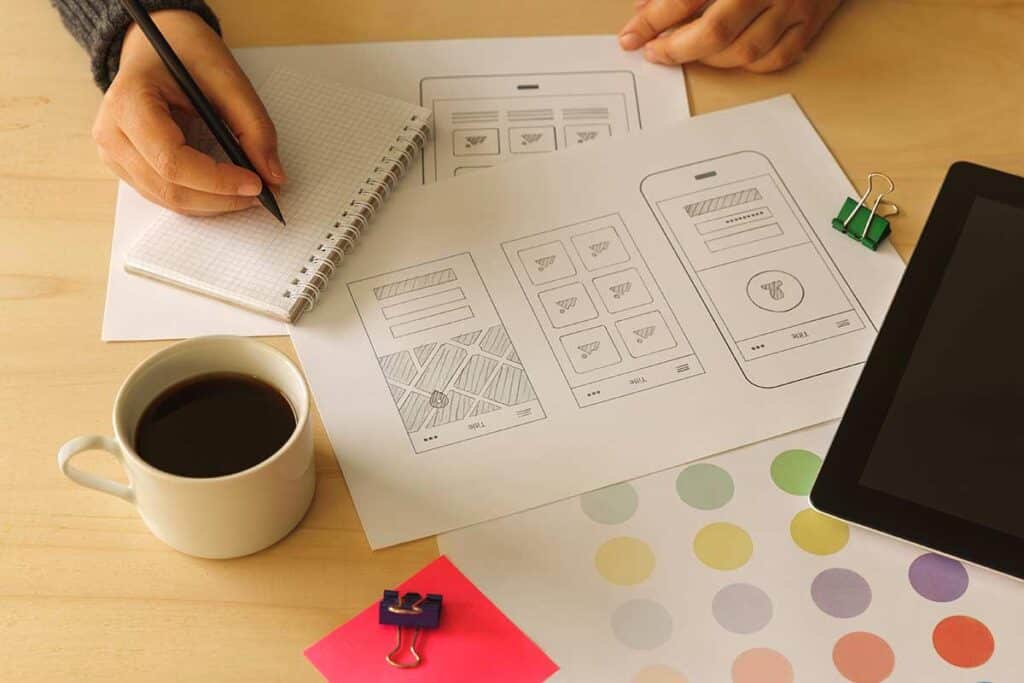
User Experience (or UX) is gaining more and more power in the design community, becoming the skeleton of any project. Over time, designers have always faced the question “How do you create a design that’s intuitive, easy to use, and efficient at the same time?” UX addresses precisely this question. Read on to find out how to design for UX.
Universal Indicators for User-Friendly Design
Unfortunately, there isn’t a series of universal indicators that can be applied to any project. Each product and each project is different. A user-friendly design for a blog differs from that of a restaurant website, and so on. The example is perhaps even more relevant when we talk about product design. A user-friendly design for a phone is different from that for furniture.
How Do We Discover Indicators for Our Project?
A very important first step is to put yourself in the user’s shoes and think about what they’re looking for from your product. Think about the steps they would follow when interacting with it.
At the same time, think about the product’s objectives. How would you like the user to interact with it? What do you want them to notice? Where do you want them to end up?
Divide the product’s objectives into several categories and address each one individually. Try to draw up a plan by answering key elements related to the relationship between your product and the user:
- What is the tangent point between the product’s objective and the user’s?
- How can you make the user see this point?
- How can you convince the user that the product is better than the competition’s?
- How can you make the product as easy as possible for the user to understand?
- How can you measure the product’s efficiency?
Understand the User’s Perspective
To understand the user, you must first know who they are. Researching the audience (target) is extremely important. This is perhaps the most difficult step. It’s very possible (and normal) that you won’t always be able to provide a perfect experience from the user’s perspective. Research can include tests, questionnaires, interviews, etc. It’s essential to understand the user and talk to them.
It’s important to keep the commercial aspect in mind as well. The ultimate goal of the product is to sell.
An essential part of UX design is also resource planning. You may have a very good idea that perfectly responds to the user’s perspective. However, the costs for implementing it must also be taken into consideration. Communication with the client is essential here. Different clients give UX designers different positions. An idea from UX can completely change the success of a product or even an entire business.
Remember!
User-friendly design requires very thorough audience research. There is no perfect recipe valid for any product. The key to success is managing to maintain a balance between the user’s perspective, marketing requirements, and business objectives and costs. UX is an extremely important department for any project, as it influences many departments and decisions. UX design has proven its importance and effectiveness and is gaining an increasingly essential role in product development with each passing day.

