Getting your business to the top of Google Maps comes down to mastering three critical areas: optimizing your Google Business Profile, building unshakeable trust through customer reviews, and establishing your local authority. When you get these right, you send a clear message to Google: your business is relevant, trustworthy, and the absolute best answer for a local customer’s search.
Your Blueprint for Ranking Higher on Google Maps
For any local business, appearing in Google’s “Local Pack”—that prime real estate with the top three map listings—isn’t just a nice bonus. It’s a lifeline. A staggering 46% of all Google searches are for local information, and those searches lead directly to customers walking through your door or calling your phone. Learning how to rank higher on Google Maps is a direct investment in your bottom line. A focused strategy, not random tactics, is what gets you there.
This guide is your step-by-step roadmap, from foundational must-dos to advanced strategies that create lasting dominance. We’ll break down the critical pieces that directly impact your visibility:
- Perfecting Your Profile: This means ensuring every detail in your Google Business Profile (GBP) is complete, accurate, and strategically optimized to attract your ideal customers.
- Building Social Trust: We’ll explore how to actively generate and manage customer reviews and leverage photos to build powerful credibility that converts searchers into buyers.
- Strengthening Local Authority: It’s all about making your website and other online mentions signal to Google that you are the go-to expert in your specific service area.
Get In Touch
The Pillars of Google Maps SEO
To truly grasp how these elements work together, the infographic below illustrates the foundational pillars of a commanding Google Maps presence.
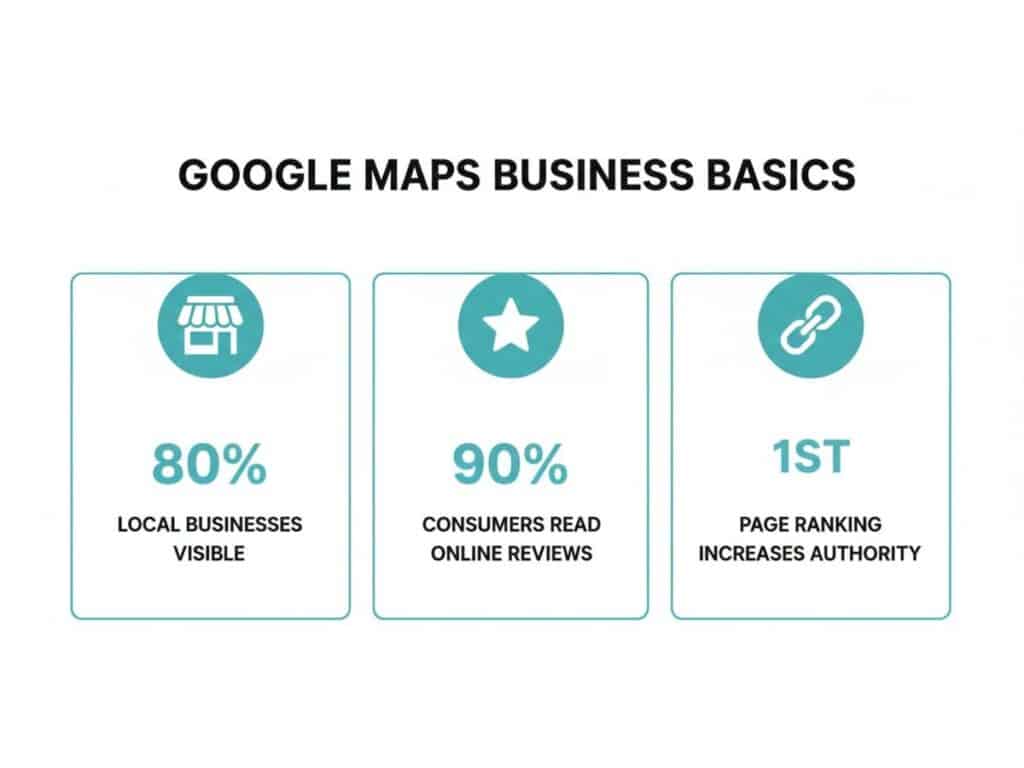
As you can see, your Google Business Profile, customer reviews, and online authority are deeply interconnected. They create a powerful feedback loop. Think of them as three legs of a stool—if one is weak, the entire structure becomes unstable.
A complete and active Google Business Profile is your digital storefront. It’s often the very first interaction a potential customer has with your brand, making it the single most important factor in your local ranking strategy.
By systematically improving each of these areas, you create a self-reinforcing cycle of success. A well-optimized profile earns more clicks, leading to more customers. Delighted customers leave positive reviews, building trust and encouraging even more people to choose you. All this activity strengthens your local authority, cementing your position at the top.
To ensure you don’t miss a single step, our local SEO checklist provides a comprehensive framework to follow.
Get In Touch
Master Your Google Business Profile
Your Google Business Profile (GBP) is the engine driving your visibility on Google Maps. It’s not just a digital listing; it’s your interactive storefront, your primary communication channel, and the single most powerful tool for influencing your local search rank. A meticulously optimized profile signals to Google that you are an active, credible, and relevant business deserving of a top spot.
An incomplete profile is like a store with the lights off. In contrast, a detailed and active profile is a brightly lit, welcoming space that invites customers inside. Your goal is to give Google—and your potential customers—every reason to choose you.
Define Your Business with Precision
Your first crucial decision is selecting your business categories. This tells Google exactly what you do and which customer searches you should appear in.
Your primary category must be the single best description of your core business.
- Practical Example: If you’re a family-run Italian eatery famous for its pizza, your primary category is “Pizza restaurant,” not the more generic “Restaurant.” This precision is vital.
Once set, add relevant secondary categories to capture a wider audience. For that same pizzeria, you might add:
- Italian restaurant
- Takeout Restaurant
- Catering
These additions help you show up in more specific, high-intent searches (“pizza takeout near me”) without diluting your primary identity. For a deeper dive, our complete guide on how to optimize your Google Business Profile is an invaluable resource.
Craft a Compelling Business Narrative
Your business description is your opportunity to connect with customers while strategically including keywords. Ditch the corporate jargon and tell your story.
- Practical Example: Instead of “We offer automotive repair services,” try “For over 20 years, Springfield’s trusted family-owned auto repair shop, specializing in expert brake service and engine diagnostics.”
This simple shift accomplishes two things: it establishes a genuine, trustworthy voice and naturally weaves in keywords like “auto repair shop in Springfield” and “brake service.” This narrative helps both search algorithms and people understand what makes you special.
A complete Google Business Profile is a massive trust signal. According to Google, customers are 2.7 times more likely to consider a business with a full profile to be reputable. Filling out every section isn’t just a chore; it’s a foundational step in building credibility.
Ensure Flawless NAP Consistency
A cornerstone of local SEO is NAP consistency. This means your Name, Address, and Phone number must be identical across every online platform—your website, social media, and local directories.
- Practical Example: A minor difference, like listing “Suite 100” on your GBP but “#100” on your website, can create confusion for Google’s crawlers and erode trust in your data, directly harming your Maps ranking.
Let’s put this in perspective. According to data from the U.S. Census Bureau, small businesses are the backbone of local economies. For these businesses, capturing local search is paramount. A precise and consistent NAP isn’t just a good idea—it’s non-negotiable for capturing that local audience.
Google Business Profile Optimization Checklist
Use this checklist to ensure every part of your profile is working to win you more customers and boost your ranking.
| GBP Element | Optimization Action | Why It Matters for Ranking |
|---|---|---|
| Business Name | Ensure it matches your legal business name exactly. No extra keywords. | Google penalizes keyword stuffing. Consistency with real-world signage builds trust. |
| Categories | Select the most specific primary category and 5-10 relevant secondary ones. | This is the #1 factor telling Google which searches you are relevant for. |
| Address & Service Area | Verify your physical address and define a precise service area if applicable. | Crucial for “near me” searches and establishing your geographic footprint. |
| Phone Number | Use a consistent, local phone number that is answered during business hours. | Consistency is a key trust signal for Google’s algorithm. |
| Website | Link to the most relevant page on your site (homepage or a specific location page). | Drives traffic and connects your GBP to your main digital asset. |
| Hours of Operation | Keep hours meticulously accurate, including all holidays and special events. | Incorrect hours lead to poor user experiences and negative signals to Google. |
| Business Description | Write a compelling, 750-character description with natural keyword usage. | Helps both users and Google understand your unique value proposition. |
| Photos & Videos | Upload high-quality, geotagged photos and videos regularly (at least weekly). | Visuals increase engagement, and frequent activity signals an active, thriving business. |
| Google Reviews | Actively request reviews and respond to every single one (positive and negative). | Review quantity, velocity, and your responses are major ranking factors. |
| Google Posts | Publish updates, offers, or event posts at least once a week. | Signals to Google that your business is active and provides fresh, relevant content. |
| Q&A Section | Proactively add and answer your own FAQs to control the narrative. | Addresses common customer questions and showcases your expertise. |
| Services/Products | Add detailed descriptions and pricing for all your services or products. | Provides rich, structured information that helps Google match you to specific queries. |
By methodically optimizing each element, you’re not just filling out a form—you’re building a powerful customer-acquisition asset.
Get In Touch
Build Trust with Reviews and Photos
In the world of local search, social proof is king. When a potential customer finds your Google Maps listing, their eyes immediately jump to two things: what other people say about you (reviews) and what your business actually looks like (photos). These are powerful trust signals for both customers and Google’s algorithm.
A steady stream of positive reviews and fresh photos tells Google you’re a legitimate, thriving business that people love. This is precisely the kind of signal that helps you climb the rankings.

Ignoring your online reputation is like locking your doors during business hours. Consistent activity—new feedback, new pictures—shows that you are engaged and customer-focused. This activity is a critical piece of the puzzle for ranking higher on Google Maps.
Cultivate a Consistent Flow of Reviews
While a high star rating is important, I’ve found that the frequency and recency of reviews often carry more weight. Google’s algorithm favors businesses that demonstrate ongoing customer satisfaction. A business getting a few new reviews every week looks more relevant today than one with hundreds of reviews from two years ago.
- Actionable Insight: Create a simple, repeatable process for asking for feedback. This could be an automated email sent 24 hours after a service is completed, or a small card with a QR code handed to customers at checkout. The goal is to make leaving a review an effortless final step in a great experience.
Your reviews are a public conversation with potential customers and Google. Responding to every single one—good or bad—proves you’re listening. That builds an incredible amount of trust.
Promptly responding is non-negotiable. For a positive review, a simple “Thank you so much, we’re glad you enjoyed your visit!” shows appreciation. For negative feedback, a calm, professional response offering a solution can turn a dissatisfied customer into a public display of excellent customer service.
To better understand customer sentiment, it’s often helpful to download and analyze your Google reviews to spot trends and identify areas for improvement.
Turn Your Profile into a Visual Story
High-quality photos and videos do more than just showcase your space; they transform your static listing into a dynamic experience. They give people a genuine feel for your business and answer questions they didn’t even know they had. Better visuals lead to more time spent on your profile—a powerful engagement signal that boosts your rankings.
- Actionable Insight: You don’t need a Hollywood budget, just a simple plan. Create a basic content calendar for your photos:
- Week 1: Showcase your products or the finished results of your services. Use bright, natural lighting.
- Week 2: Post friendly photos of your team at work. Putting a face to the name makes your business more human and approachable.
- Week 3: Upload clear shots of your building’s exterior and interior. Help people know what to look for when they arrive.
- Week 4: Share a short video tour or a quick clip of a customer testimonial.
Remember, reviews and photos work in tandem. A consistent drip of new feedback tells Google your business is thriving today. When you pair that with a steady supply of recent, geotagged photos, you’re sending all the right signals to boost your profile’s authority.
Get In Touch
Build Your Local Authority and Link Signals
Think of your Google Maps profile and your website as two halves of the same whole; one cannot succeed without the other. To truly dominate the map rankings, your website must be a bastion of local authority, consistently signaling to Google that you are a relevant and trusted entity in your community.
It begins with your site’s structure. You must make your local focus undeniable. This means building dedicated pages not only for each service you offer but also for each specific location you serve.
- Practical Example: A Chicago-based landscaping company shouldn’t have one generic “services” page. Instead, it should create distinct, optimized pages like “Lawn Maintenance in Lincoln Park” and “Patio Installation in Evanston.”
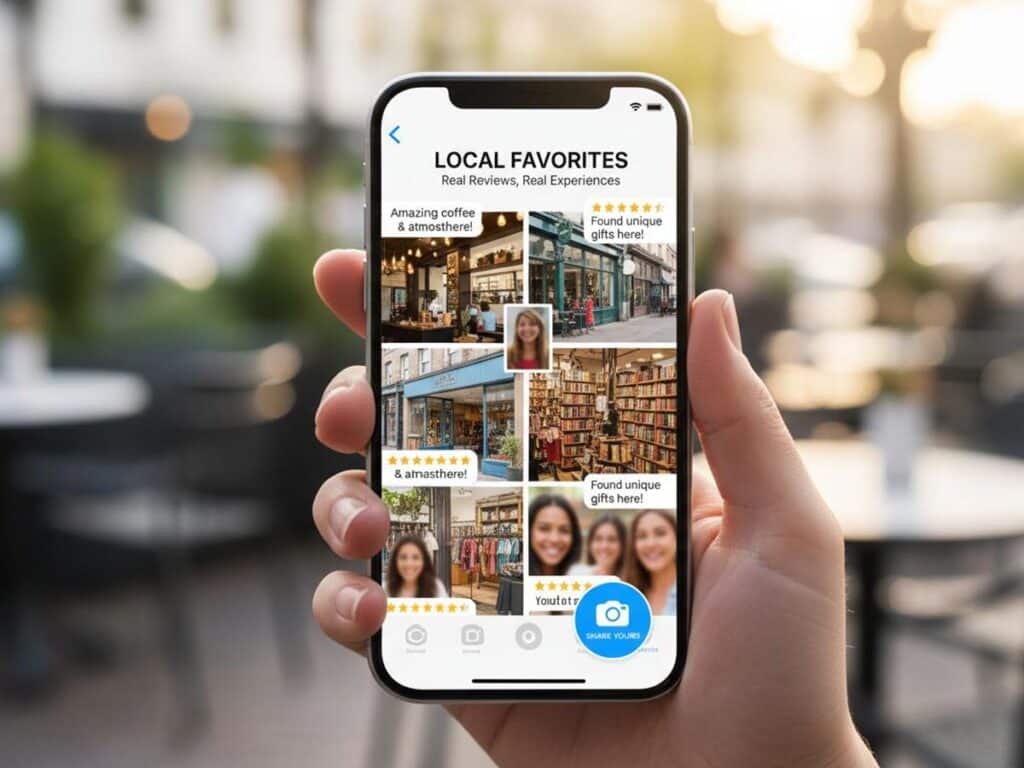
This hyper-local strategy allows you to embed a unique Google Map on each location page. This sends a powerful signal to Google, confirming your physical connection to that specific address and directly reinforcing the authority of your Google Business Profile.
Get Technical with Structured Data
To make it even easier for Google to understand your business, you must implement schema markup. This is essentially a specialized vocabulary you add to your website’s code, translating your content into a language search engines can instantly process.
For any local business, the “LocalBusiness” schema is non-negotiable. It allows you to explicitly define crucial details, leaving nothing to interpretation:
- Business name
- Physical address
- Phone number
- Hours of operation
- Customer ratings
By spoon-feeding Google this structured data, you eliminate ambiguity and help it validate the information on your GBP. It’s a technical step, but the payoff in trust and visibility is enormous.
Your off-page signals, especially local backlinks, are powerful votes of confidence from your community. Each high-quality local link tells Google that you’re not just another business—you’re a trusted local authority.
Cultivate a Strong Local Backlink Profile
With your website’s foundation in place, it’s time to build authority through local link building. This is the art of earning links from other respected, local websites. In Google’s eyes, these links are a massive ranking factor because they act as endorsements from within your community.
- Practical Example: Imagine a new coffee shop sponsoring a local 5K charity run. That sponsorship often results in a backlink from the event’s website and perhaps a mention in the local newspaper’s online edition. Or picture that landscaping company offering a free gardening workshop for a neighborhood association, earning a link from the association’s site.
These aren’t just random links; they are geographically relevant votes of confidence. Getting them requires a deliberate strategy, such as joining your local Chamber of Commerce or sponsoring community events. While local is key, understanding the broader principles of link authority is also a game-changer. Learning how to get high DA backlinks provides a valuable perspective that complements your local efforts.
Every quality link you earn strengthens your digital foundation, making it that much harder for competitors to unseat you from the top of Google Maps.
Get In Touch
Advanced Tactics for Long-Term Dominance
Once you’ve built a solid foundation with an optimized profile and a steady flow of reviews, it’s time to shift from defense to offense. The real work of securing a top spot long-term involves advanced strategies that create a sustainable competitive advantage. It’s about moving from passive maintenance to active, strategic engagement.

The key is to create meaningful opportunities for customers to connect with your brand directly on your profile, signaling ongoing relevance to Google.
Use Google Posts to Drive Timely Engagement
Think of Google Posts as your brand’s personal billboard, placed directly on your search and Maps listings for free. When you publish regular updates, you’re sending a powerful signal to Google that your business is active and engaged. More importantly, you’re giving potential customers valuable, timely information right when they need it most.
- Actionable Insight: Use posts to create urgency and drive action.
- Special Offers: “This week only: 15% off all espresso drinks! Show this post to redeem.”
- Upcoming Events: “Join our free home-brewing workshop this Saturday at 10 AM. Limited spots available!”
- New Products: “Just in! Try our new single-origin coffee from Ethiopia. Available for a limited time.”
A consistent posting schedule keeps your profile fresh and can dramatically increase user engagement—a major ranking factor.
Take Control of the Questions & Answers Section
The Q&A section on your GBP is a goldmine that most businesses ignore. Left unchecked, it can become a source of misinformation. The smart strategy is to take control.
- Actionable Insight: Proactively seed this section yourself. Brainstorm your most frequently asked questions, post them, and then immediately provide clear, comprehensive, and keyword-rich answers.
- Q: “Do you have outdoor seating?”
- A: “Yes! We have a beautiful, pet-friendly patio with seating for 20 guests, perfect for enjoying the sunny weather in downtown Springfield.”
This approach gives customers instant answers, improving their experience, and allows you to strategically place important keywords directly into your profile.
By answering your customers’ common questions before they even ask, you position your business as a helpful authority. This simple step streamlines their journey and can make all the difference when they’re deciding between you and a competitor who left this section blank.
Monitor Your Performance with Precision
You can’t improve what you don’t measure. For true long-term dominance, you must rely on data, not guesswork. While GBP offers basic insights, you need advanced tools for the full picture.
This is where geo-grid rank trackers become essential. A standard search from your computer is biased by your location. A geo-grid tool shows you exactly how you rank for key terms from dozens of different points across your service area.
- Actionable Insight: This level of detail allows you to:
- Find blind spots: Discover which neighborhoods have low visibility where competitors are outranking you.
- Identify opportunities: Pinpoint areas where you’re already strong and double down on marketing efforts there for maximum impact.
- Track progress: Measure the tangible results of your optimization efforts and make smarter, data-driven adjustments.
The U.S. Small Business Administration reports that around 50% of small businesses fail within the first five years. A common reason is a failure to adapt and consistently attract new customers. Diligent performance monitoring ensures you’re always making informed improvements to your local search presence, securing that top spot on Google Maps for years to come.
Common Questions About Google Maps SEO
As you dive into optimizing your local presence, questions are inevitable. Getting the right answers can be the difference between a winning strategy and wasted effort. Let’s tackle some of the most common questions business owners ask about Google Maps SEO.
How Long Does It Take to Rank Higher on Google Maps?
This is the million-dollar question. The honest answer: it depends. While you might see some positive movement within a few weeks of a thorough profile optimization, securing a consistently high rank typically takes three to six months of dedicated effort.
Think of it as building trust with Google. That doesn’t happen overnight. Several factors influence your specific timeline:
- Market Competition: Trying to rank as a pizzeria in Chicago is a much tougher battle than being the only specialized bakery in a small town.
- Your Starting Point: If you already have an established website and good reviews, you have a head start. A new business starting from scratch has more ground to cover.
- Consistency is King: This is the most critical factor. Regularly earning new reviews, adding fresh photos, and publishing Google Posts are the ongoing signals that tell Google you are active, relevant, and trustworthy.
Remember, Google Maps SEO is a marathon, not a sprint. The algorithm is designed to reward sustained, quality effort over short-term gimmicks. Consistent management shows Google that your business is a reliable fixture in the community.
Can I Rank in a City Without a Physical Address?
This is a common point of confusion for service-area businesses (SABs) like plumbers or mobile dog groomers. The short answer is that it’s challenging, but not impossible.
Google’s local algorithm is built around proximity, so it will always prioritize businesses physically located in the searcher’s area. This is a fundamental reality.
- Actionable Insight: As an SAB, you must clearly define your service areas in your GBP. While you may not rank in the “Local Pack” for a search 20 miles away, you can absolutely appear in results for users within your designated zones. To boost your chances, focus on creating city-specific landing pages on your website and earning local links from those target communities.
What Are the Biggest Local SEO Mistakes to Avoid?
I’ve seen many well-intentioned businesses sabotage their own efforts by making a few classic mistakes. Sometimes, what you don’t do is just as important as what you do.
Here are the most critical errors to avoid:
- NAP Inconsistency: Your Name, Address, and Phone number must be a perfect match everywhere online. Even a small variation like “St.” vs. “Street” can confuse search engines and dilute your authority.
- Keyword Stuffing Your Business Name: It’s tempting to add descriptive terms like “Joe’s Plumbing – Best Emergency Plumber.” This is a direct violation of Google’s policies and can get your listing suspended. Stick to your real-world business name, as outlined in Google’s official support documentation.
- Neglecting Reviews: Ignoring reviews—both positive and negative—tells potential customers (and Google) that you’re not engaged or don’t value feedback.
- Choosing the Wrong Categories: Your primary category is one of the most powerful ranking factors. Selecting one that’s too broad or simply incorrect means you’ll never connect with the customers actually looking for what you offer.
At Galant Studios, we cut through the complexity of local SEO to deliver real, measurable growth for your business. We build data-driven strategies that don’t just help you rank higher—they help you attract the right customers. Discover how we can elevate your brand’s visibility.