In a competitive market, appearing in local search results isn’t an advantage; it’s a fundamental requirement for survival and growth. For any business with a physical storefront or a defined service area, local search engine optimization is the engine that drives foot traffic, phone calls, and revenue. Your customers are searching for products and services “near me” every single day. Failing to optimize for these queries makes your business virtually invisible to its most qualified and ready-to-buy audience.
This guide moves beyond generic advice to provide a comprehensive local SEO checklist filled with actionable, conversion-focused strategies. We’ll methodically enhance your digital footprint, starting with your most powerful asset—your Google Business Profile—and building toward advanced tactics like local link building and schema markup.
Each item on this checklist builds upon the last, creating a powerful framework that strengthens your online presence, establishes credibility with search engines, and forges a direct connection with the community you serve. This resource will help you transform your local search performance from an afterthought into a cornerstone of your growth strategy, ensuring you capture high-intent customers at the exact moment they need you.
1. Optimize Your Google Business Profile Completely
Think of your Google Business Profile (GBP) as your digital storefront. It’s the first impression you make on Google, and it’s the foundation of any effective local SEO checklist. This free tool allows you to control how your business appears across Google Search and Maps, giving customers instant access to your address, phone number, hours, and services—precisely the details they need to decide whether to contact you or a competitor.
Why Complete Optimization is Non-Negotiable
A sparse or outdated profile sends a clear message: “We don’t pay attention to detail.” In contrast, a comprehensive and active profile builds immediate trust and drives engagement. For example, a local restaurant can see a significant uptick in reservations just by adding high-quality menu photos and using Google Posts to announce daily specials. Similarly, a plumbing company can generate more qualified leads by meticulously defining its service areas and listing specific offerings like “emergency drain cleaning.” To truly maximize your local presence, a deep dive into optimizing your Google Business Profile is paramount. This strategic effort signals to Google that your business is active, reliable, and the best answer for local searchers.
The impact of a well-maintained GBP is significant, as it directly boosts consumer confidence and tangible business results. The following infographic highlights the key performance indicators tied to complete profile optimization.
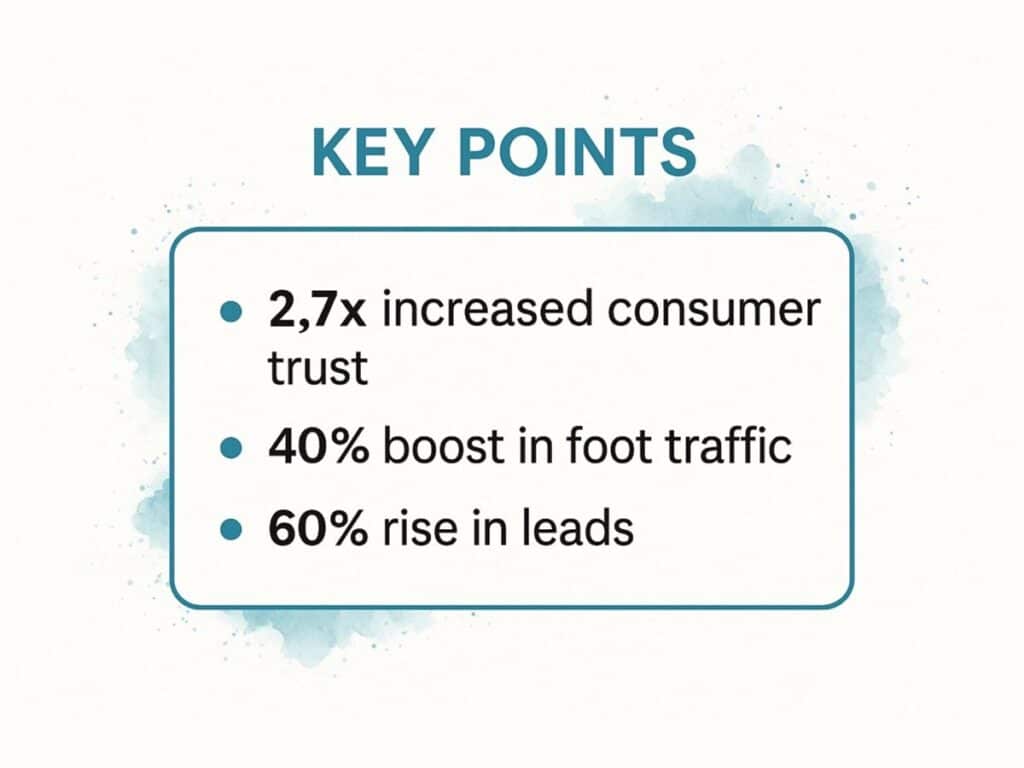
These metrics clearly demonstrate that a fully optimized profile translates directly into increased consumer trust, which in turn drives measurable growth in leads and physical visits.
Actionable Optimization Steps
Transform your GBP from a simple listing into a powerful customer acquisition tool with these actionable steps:
- Enrich with Visuals: Don’t just tell customers what you do—show them. Upload at least 10 high-resolution photos of your storefront, interior, products, and team. For example, a landscaping company should feature before-and-after shots of their work.
- Maintain Activity with Posts: Publish Google Posts at least once per week. Share updates, promotions, or helpful tips. A local bookstore could post about an upcoming author signing event to drive foot traffic.
- Manage Reputation: Respond to every single review, positive or negative, within 24-48 hours. This shows you value customer feedback and are actively engaged.
- Enable Direct Communication: Activate the messaging feature. This allows customers to contact you directly from your profile, reducing friction and capturing leads faster.
- Detail Your Offerings: Use the “Products” and “Services” sections to list everything you offer. A local gym should list specific classes like “Yoga,” “Spin,” and “Personal Training” to appear for more targeted searches.
For a more comprehensive guide on leveraging these features, this video offers a detailed walkthrough.
Consistently applying these strategies ensures your profile remains a top asset in your local SEO toolkit. For further reading, you can learn more about how to optimize your Google Business Profile for maximum impact.
2. Build Consistent NAP Citations Across Directories
A cornerstone of any successful local SEO checklist is the meticulous management of your business’s online citations. Citations are mentions of your business’s core information: Name, Address, and Phone number (NAP). Search engines like Google use the consistency of this NAP data across hundreds of online directories, websites, and apps as a powerful trust signal. When your information is identical everywhere, it confirms your business’s existence and legitimacy, which is fundamental for earning a top spot in local search results.
Why NAP Consistency is Critical for Trust
Inconsistent NAP information—like an old address on Yelp or a wrong phone number on a local blog—creates confusion for search engines and potential customers. This ambiguity can directly harm your local rankings and lead to lost sales. Imagine a potential customer trying to call for a reservation but finding an out-of-service number. That’s a lost opportunity. A practical example: a multi-location dental practice was able to increase its local visibility by 150% after a comprehensive campaign to standardize NAP data across more than 50 relevant directories. The principle is simple: consistency equals credibility.
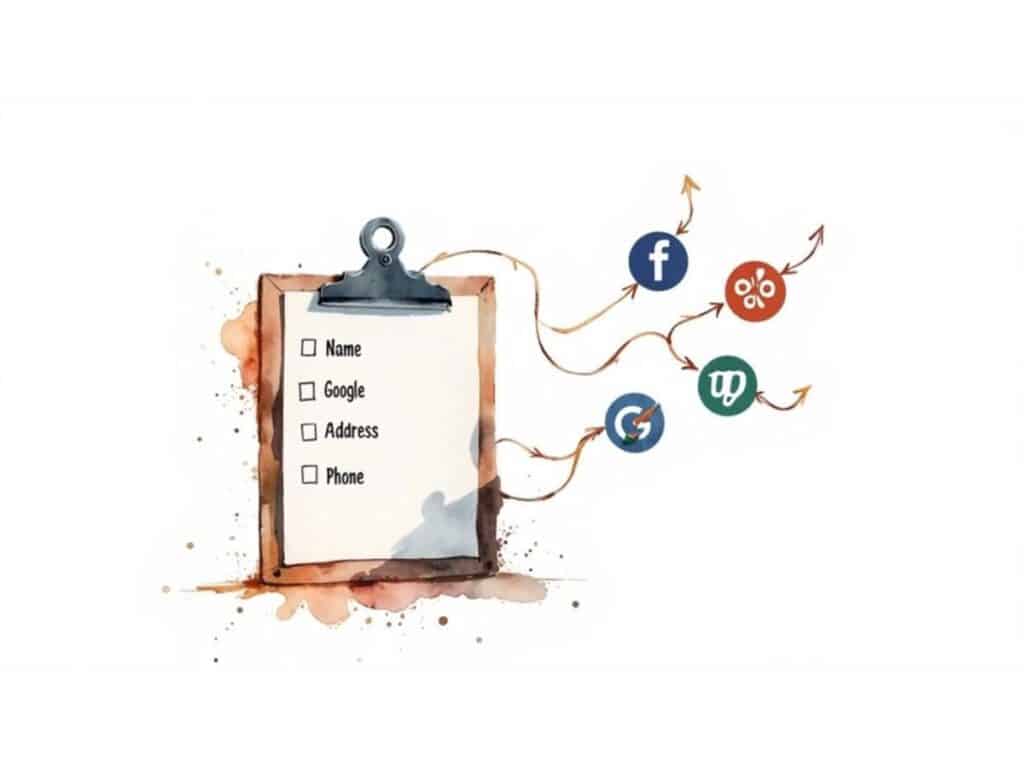
The impact of consistent NAP extends beyond search algorithms; it builds consumer confidence. When a potential customer sees the same correct information on Google, Facebook, and a local industry directory, it reinforces your professionalism and makes it easier for them to do business with you.
Actionable Citation Building Steps
To ensure your business information is a source of strength, not weakness, implement a systematic approach to citation management:
- Establish a Master NAP: Create a single, official document with the exact format for your business name, address, and phone number. For example, decide if you’ll use “Street” or “St.” and stick with it everywhere. This becomes your single source of truth.
- Audit Existing Citations: Use a tool like BrightLocal or Whitespark to perform a comprehensive audit of your existing online mentions. This will quickly reveal inconsistencies you need to fix.
- Prioritize Major Directories: Start by correcting your information on high-authority platforms like Google Business Profile, Facebook, Apple Maps, and Yelp. These are the most visible and influential.
- Target Niche Directories: Identify and secure listings in directories specific to your industry or city. A local contractor should be listed in HomeAdvisor, while a lawyer should be on FindLaw. These niche citations carry significant weight.
- Conduct Regular Audits: Schedule quarterly reviews of your citations to catch and correct any new inaccuracies that may have popped up.
Consistently applying these steps will fortify your local SEO foundation. For a deeper understanding, discover the best practices for local citations building.
3. Generate and Manage Customer Reviews Strategically
Customer reviews are the modern-day word-of-mouth and a critical ranking factor in local search. They provide search engines with fresh, user-generated content about your business, signaling trust, relevance, and authority. A strategic review management process isn’t about passively waiting for feedback; it’s about proactively encouraging satisfied customers to share their experiences, responding to all comments promptly, and leveraging that feedback to improve your business.
Why Strategic Review Management is Essential
A steady stream of positive reviews builds a powerful digital reputation that directly impacts your bottom line. Research shows that businesses with higher star ratings and a greater number of reviews often dominate the local map pack, capturing the majority of high-intent search traffic. For example, a local auto repair shop can significantly increase its appointment bookings by implementing a simple system to text customers a review link after their service is complete. This proactive approach can be the deciding factor for a customer choosing between you and a competitor with fewer, older reviews.

This proactive management demonstrates to both Google and potential customers that you are engaged and committed to satisfaction. The data shows that businesses with higher star ratings and a greater number of reviews often dominate the local map pack, capturing the majority of local search traffic and consumer trust.
Actionable Review Management Steps
To build a robust review profile that drives business growth, implement these best practices:
- Simplify the Process: Make it effortless for customers to leave feedback. Provide direct links to your review profiles via email, SMS, or even QR codes at your place of business. The fewer clicks, the better.
- Time Your Requests: Ask for a review at the moment of peak customer satisfaction. For a real estate agent, this is right after a successful closing. For a restaurant, it’s after a customer has had a fantastic meal.
- Respond to All Reviews: Acknowledge every review within 24-48 hours. Thank positive reviewers personally. Address negative feedback professionally by taking the conversation offline and offering a solution. This shows you care.
- Train Your Team: Empower your staff to ask for reviews. Give them simple, non-pushy language to use, like, “We’re so glad you enjoyed your experience! If you have a moment, we’d love it if you shared your feedback on Google.”
- Diversify Your Platforms: While Google is key, encourage reviews on industry-specific sites that matter to your customers. For a hotel, this means TripAdvisor; for a B2B service, it might be Clutch or G2.
4. Create Location-Specific Landing Pages
If your business serves multiple towns, cities, or neighborhoods, location-specific landing pages are a must-have in your local SEO checklist. These are dedicated web pages designed to rank for searches in a particular geographic area, like “electrician in Scottsdale” or “family lawyer in Glendale.” This strategy moves beyond a generic “contact us” page to create a unique, hyper-relevant asset for each market you serve.
Why Location-Specific Pages are Crucial
A generic website struggles to signal relevance to Google for specific local queries. By creating a dedicated page for each city you serve, you provide a targeted resource that speaks directly to that audience, dramatically improving your ranking potential. For example, a multi-location law firm achieved first-page rankings in 12 new markets after developing practice-area pages tailored to each city. These pages included local testimonials, case studies, and directions to the local office.
These pages act as powerful signals to search engines, demonstrating your commitment and authority within each community. They also provide a superior user experience by offering locally relevant information—like mentioning local landmarks or area-specific promotions—which builds trust and boosts conversion rates. To further enhance these pages, learning how to insert dynamic location content on your landing pages can personalize the user experience and increase relevance for paid ad campaigns.
Actionable Optimization Steps
To build effective location-specific landing pages that convert, implement the following best practices:
- Develop Unique Content: Don’t just copy and paste. Write at least 300-500 words of unique content for each page. Mention local landmarks, specific neighborhoods, and area-specific customer needs. For example, a roofing company in Phoenix might mention “monsoon season storm damage.”
- Optimize On-Page Elements: Create unique title tags and meta descriptions for each page, including the city and service keyword (e.g., “Expert Plumbing Services in Downtown Denver”).
- Embed Local Proof: Include testimonials from clients in that specific area. Add photos from jobs you’ve completed in that city. This builds powerful local credibility.
- Integrate Local Schema: Add LocalBusiness schema markup to each page, specifying the unique address and service area details for that location.
- Include a Map and Directions: Embed a Google Map of the specific service area or office location. This provides clear visual context and reinforces your local presence to both users and search engines.
5. Implement Local Schema Markup
Schema markup is a form of structured data—a vocabulary of code—that you add to your website to help search engines better understand your content. For local businesses, implementing local schema markup is a powerful yet underutilized tactic. It allows you to give search engines explicit details about your business, including its physical address, hours of operation, service areas, and phone number. This enhanced communication helps Google display your information more accurately and attractively in search results, giving you a competitive edge.
Why Schema Markup is a Competitive Edge
Without schema, you’re leaving the interpretation of your content up to search engines. With schema, you’re spoon-feeding them the exact information you want them to highlight. This can result in “rich snippets”—eye-catching additions to your search listing like star ratings, event schedules, or pricing. For example, a restaurant that implements menu schema can have its popular dishes appear directly in the search results. A local event venue using Event schema can have its upcoming concerts featured. This makes your listing far more compelling and can dramatically increase click-through rates.
The impact of structured data is tangible. By improving how search engines present your business, you boost user trust before they even click on your site. Implementing even basic local schema can differentiate your business from competitors who have neglected this critical technical step.
Actionable Optimization Steps
To leverage schema markup for a powerful local SEO advantage, integrate the following best practices:
- Start with Core Schema: Begin by implementing the
LocalBusinessschema. At a minimum, include your exact business name, address, phone number (NAP), and hours of operation. - Be Highly Specific: Use the most specific schema type possible. If you run a dental clinic, use
Dentistinstead of the genericLocalBusiness. A list of specific business types is available on Schema.org. - Validate Your Code: Before deploying any code, always use a tool like the Schema Markup Validator to test it. This ensures it’s error-free and can be read by search engines.
- Maintain Consistency: The information in your schema markup must be an exact match to the information displayed on the webpage. Any discrepancy can confuse search engines and negate the benefits.
- Expand Your Markup: Once the basics are in place, explore other relevant schema types. Add
Reviewschema for testimonials,Eventschema for workshops, orProductschema for your key offerings.
6. Optimize for Mobile and Local Voice Search
Optimizing for mobile and voice search is no longer optional; it’s a critical part of a modern local SEO checklist. This strategy focuses on the millions of customers using their smartphones and smart speakers for on-the-go, hands-free queries. Your website must provide a seamless mobile experience and be structured to answer conversational, question-based phrases like, “Where is the closest coffee shop?” or “What time does the hardware store open near me?”
Why Mobile and Voice Optimization is Non-Negotiable
Over half of all web traffic now comes from mobile devices. If your site is slow or difficult to navigate on a smartphone, you’re losing customers. Period. But it goes deeper: voice search is dominated by local intent. An urgent care clinic that optimizes for “urgent care open now near me” can become the top voice search result, potentially doubling its walk-in patient volume from users seeking immediate help. This optimization signals to search engines that your business provides fast, accessible, and relevant answers to local user intent.
The user experience on mobile is directly tied to business outcomes. A slow-loading site will increase bounce rates and lose potential customers. By prioritizing mobile-first design and conversational content, you align your digital presence with the real-world behaviors of your target audience, making it easier for them to find and choose your business.
Actionable Optimization Steps
To effectively capture traffic from mobile and voice searches, implement these targeted strategies:
- Target Conversational Keywords: Think about how people actually speak. Instead of just “plumber [City],” target long-tail phrases like “find a plumber in [City] that offers 24-hour service.”
- Create FAQ Pages: Develop a dedicated FAQ page that directly answers the most common questions customers ask about your services, hours, location, and pricing. Structure each question as a heading (H2 or H3).
- Prioritize Mobile Speed: Your website must load in under 3 seconds on a mobile connection. Use tools like Google’s PageSpeed Insights to test your site and identify specific areas for improvement.
- Structure Data with Schema: Implement FAQ schema on your question-and-answer pages. This helps search engines understand your content and can make you eligible for rich results and voice search answers.
- Claim Voice Assistant Listings: Ensure your business information is accurate on platforms that power voice assistants, including Apple Maps (which powers Siri), Yelp, and Bing.
7. Build Local Link Building Campaigns
Local link building is the strategic process of earning backlinks from other reputable websites within your specific geographic area. Unlike general SEO, which might target a link from any high-authority site, this tactic prioritizes hyper-local relevance. A backlink from the local chamber of commerce, a neighborhood blog, or a nearby business you partner with acts as a powerful vote of confidence, signaling to search engines that your business is a trusted and integral part of the local community.
Why Local Links are a Critical Ranking Signal
Earning links from local businesses and community organizations builds a strong foundation of geographic relevance. This is a non-negotiable part of any serious local SEO checklist because it directly tells Google that your business is trusted by others in the community it serves. For example, a restaurant featured in an article by a local food blogger gains both authority and referral traffic. Similarly, a construction company that sponsors a local youth sports team and gets a link from the team’s website earns a highly relevant endorsement. These connections are more than just links; they are digital proof of your local standing.
The authority passed from a well-respected local institution can carry more weight for local search queries than a generic, non-local link. This focus on hyper-relevant endorsements is what separates top-ranking local businesses from their competitors.
Actionable Link Building Strategies
To systematically build a portfolio of high-quality local links, implement these targeted approaches:
- Sponsor Local Events: Support a local charity run, festival, or community fair. Sponsorship almost always results in a backlink from the event organizer’s website—a highly relevant local endorsement.
- Host a Community Workshop: Offer a free workshop related to your expertise. A hardware store could host a DIY home repair class. Promote it to local community calendars and news sites, which will link back to your registration page.
- Join Local Business Associations: Become a member of your local Chamber of Commerce or other industry-specific groups. These organizations typically have a member directory with a link back to your website.
- Create Localized Content: Develop a resource that is genuinely useful to your community, like “The Ultimate Guide to Dog-Friendly Parks in [Your City].” This type of content naturally attracts links from local bloggers, news outlets, and community portals.
- Build Supplier and Partner Relationships: Ask businesses you already work with—your suppliers, vendors, or complementary service providers—to add a link to your website from their partners page. It’s a simple, mutually beneficial way to earn a relevant link.
8. Monitor and Track Local SEO Performance
Monitoring local SEO performance means systematically tracking key performance indicators (KPIs) to measure the impact of your efforts. This process gives you the data you need to understand what’s working, identify what isn’t, and prove the return on your investment. Without consistent tracking, your local SEO is just guesswork. It becomes impossible to adapt to algorithm changes or outmaneuver your competition effectively.
Why Performance Tracking is Non-Negotiable
Effective local SEO is not a “set it and forget it” task; it’s a continuous cycle of implementation, measurement, and refinement. By tracking performance, you can make data-driven decisions that directly impact business growth. For example, by tracking keyword rankings, a local law firm might discover it ranks on page two for a highly valuable term like “car accident lawyer near me.” This insight allows them to focus their efforts on that specific page to push it to page one, potentially capturing thousands of dollars in new business.
This data-driven approach transforms your strategy from reactive to proactive. It ensures every action you take is designed to produce a measurable result. To gain a deeper understanding of this process, it is beneficial to explore the methodologies of how to monitor and track local SEO performance in detail. This strategic oversight ensures that your resources are allocated efficiently and that your business remains competitive in the local market.
Actionable Optimization Steps
To establish a robust monitoring framework for your local SEO checklist, implement these essential practices:
- Establish a Reporting Dashboard: Use a free tool like Google Looker Studio to create a simple, automated dashboard. This centralizes your most important metrics so you can review them at a glance.
- Track Local Keyword Rankings: Monitor your search result position for your most important local keywords. Track both broad terms (e.g., “plumber in Brooklyn”) and long-tail phrases (e.g., “emergency pipe repair near me”).
- Analyze GBP Insights Weekly: Your Google Business Profile provides a wealth of data. Every week, review how customers find you, what actions they take (calls, website clicks, direction requests), and which of your photos are performing best.
- Set Up Local Conversion Goals: In Google Analytics, set up specific goals to measure what matters. This could be form submissions from a location-specific landing page or clicks on your phone number from a mobile device.
- Benchmark Against Competitors: Regularly analyze the local search presence of your top 3-5 competitors. See what keywords they rank for that you don’t, and identify gaps in your own strategy to uncover new opportunities.
Local SEO Checklist Comparison
| Strategy | Implementation Complexity 🔄 | Resource Requirements ⚡ | Expected Outcomes 📊 | Ideal Use Cases 💡 | Key Advantages ⭐ |
|---|---|---|---|---|---|
| Optimize Your Google Business Profile Completely | Medium – requires regular updates and monitoring | Low – free tool, time for maintenance | Increased local visibility and customer trust (2.7x more reputable) | Local businesses aiming for enhanced Google presence | Free, direct impact on local search rankings |
| Build Consistent NAP Citations Across Directories | Medium to High – manual auditing and ongoing updates | Moderate – time and tools like BrightLocal needed | Improved trust signals and higher local rankings | Businesses needing citation cleanup and consistency | Cost-effective, boosts domain authority |
| Generate and Manage Customer Reviews Strategically | Medium – ongoing time investment and response needed | Moderate – tools/platforms for monitoring | Higher rankings, increased trust, fresh keyword-rich content | Businesses prioritizing reputation and social proof | Direct influence on SEO, builds credibility |
| Create Location-Specific Landing Pages | High – content creation for each location | High – content writing and SEO expertise | Increased local leads, multi-location keyword targeting | Multi-location businesses targeting different markets | Targets multiple geographic keywords effectively |
| Implement Local Schema Markup | Medium to High – technical markup required | Low to Moderate – developer or plugin assistance | Enhanced search appearance, higher CTR | Businesses with websites aiming for rich snippets | Competitive edge via rich snippets, quick impact |
| Optimize for Mobile and Local Voice Search | High – technical and content optimization | High – website redesign, content creation | Increased mobile orders and voice search traffic | Businesses targeting mobile and voice search users | Future-proof SEO, improved user experience |
| Build Local Link Building Campaigns | High – relationship and outreach intensive | High – time and networking effort required | Improved authority, referral traffic, local brand awareness | Businesses focusing on community involvement and backlinks | Long-term SEO value, builds local authority |
| Monitor and Track Local SEO Performance | Medium – setup of tools and regular analysis | Moderate – investment in tools and time | Data-driven strategy optimization, ROI measurement | Businesses seeking continuous improvement and benchmarking | Proactive management, competitor insights |
From Checklist to Competitive Advantage
Navigating this comprehensive local SEO checklist transforms a series of tasks into a cohesive, powerful strategy for local market domination. We have moved beyond theory, delving into the practical execution of critical local search tactics. From the meticulous optimization of your Google Business Profile to the strategic acquisition of high-quality local links, each checklist item serves as a foundational pillar supporting your digital presence.
The journey began with mastering your Google Business Profile (GBP), ensuring every field is leveraged to its full potential. We then emphasized the importance of consistent NAP citations across relevant directories, establishing digital trust with both search engines and potential customers. Generating a steady stream of authentic reviews was highlighted not just as a ranking factor but as a crucial element of social proof, directly influencing consumer decisions. The guide also detailed the necessity of creating location-specific landing pages and implementing local schema markup, providing search engines with unambiguous signals about your business’s relevance to a specific geographic area. Finally, we covered advanced strategies like mobile and voice search optimization and the critical need for continuous performance tracking to refine your approach.
Key Takeaways for Sustainable Local Growth
The core principle unifying these efforts is consistency and intentionality. A single, well-optimized element can provide a minor boost, but the synergistic effect of executing the entire checklist creates a formidable competitive advantage. Remember these essential points:
- Trust is the Currency: Consistency in your NAP data, positive reviews, and a professionally managed GBP build trust with Google’s E-E-A-T (Experience, Expertise, Authoritativeness, and Trustworthiness) framework, which is fundamental to search visibility.
- Relevance is Non-Negotiable: Creating location-specific content and using local schema are not optional; they are direct lines of communication to search engines, explicitly stating who you serve and where you serve them.
- Local SEO is a Continuous Process: The digital landscape is not static. Consumer search behavior evolves, competitors adapt, and algorithms are updated. Consistent monitoring and iterative improvement are required to maintain and enhance your rankings over time.
Your Actionable Next Steps
Completing this checklist is the first step. The next is to establish a sustainable workflow for ongoing management and optimization. Begin by scheduling a quarterly audit of your entire local SEO presence. Use this time to review your GBP for accuracy, scan for new citation opportunities, respond to recent reviews, and analyze your performance data from Google Analytics and Search Console. By treating this local SEO checklist not as a one-time project but as a recurring operational guide, you embed best practices into your marketing rhythm, ensuring long-term success and a dominant position in your local market. This disciplined approach is what separates fleeting visibility from lasting digital authority.
If implementing this detailed local SEO checklist feels overwhelming or you want to accelerate your results with expert precision, Galant Studios can help. We specialize in transforming these complex tasks into a streamlined strategy that drives measurable growth and secures your competitive edge. Visit us at Galant Studios to discover how our data-driven approach can elevate your local search presence.