Search rankings determine your visibility — and your revenue. Without targeted small business SEO strategies, you risk staying invisible to customers ready to buy. According to the U.S. Small Business Administration (SBA), 46% of small businesses still lack a formal SEO plan, leaving thousands in untapped revenue. Meanwhile, the Google Search Central documentation reveals 76% of mobile users who perform local searches visit a related business within 24 hours—make sure that’s you.
What You Will Learn
This roundup delivers 10 proven tactics to:
- Boost local search visibility, drive foot traffic, and increase leads
- Implement a long-tail keyword strategy to capture high-intent prospects
- Structure content marketing with topic clusters and real-world examples
- Optimize on-page elements and technical SEO for faster indexing and UX gains
- Build authoritative links, manage customer reviews, and earn trust
- Prepare for voice search, featured snippets, and mobile-first indexing
- Conduct competitive analysis to outsmart rivals and claim market share
Why It Matters
Each strategy offers:
- Practical examples such as live GMB profile screenshots that convert
- Step-by-step instructions on microdata markup, site audits, and more
- Clear metrics to measure click-through rates, engagement, and ROI
These actionable insights guide you through targeted optimization, content planning, and authority building—so you can secure more leads, convert prospects, and grow revenue.
Get In Touch
1. Local SEO Optimization
As part of effective small business SEO strategies, Local SEO directly connects you with customers in your neighborhood ready to purchase. By optimizing your online presence, you ensure they find and choose your business over competitors.

What is Local SEO?
Local SEO optimizes your Google Business Profile, local citations, online reviews, and location-specific keywords to rank in the Google Local Pack.
Examples of Successful Implementation
- A plumbing company ranking for “plumber near me” queries saw a 40% increase in service calls
- Dental practices appearing in the Local Pack boosted new patient bookings by 25%
- A coffee shop drove 30% more foot traffic with an optimized Business Profile
- A home services provider created city-specific landing pages, doubling conversion rates
Actionable Tips
- Claim and fully complete your Google Business Profile immediately, including high-resolution photos and service descriptions
- Encourage customers to leave reviews via follow-up emails or in-store signage, improving your average star rating
- Ensure NAP consistency across Yelp, Apple Maps, and local directories to avoid confusion
- Create location-specific landing pages with clear CTAs like “Book [Service] in [City] Today”
- Respond to every review—positive or negative—within 48 hours to showcase exceptional service
- Include local keywords naturally in your content and meta tags to match search intent
Why and When to Use
Use Local SEO Optimization when your business relies on in-person visits or a defined service radius. It builds trust, boosts visibility in local search, and drives conversions by targeting ready-to-buy customers.
Additional Resources
- See Local search optimization on Wikipedia for local ranking factors
- Learn more about Local SEO Optimization with Galant Studios
2. Long-Tail Keyword Strategy
Long-tail keywords are highly specific search phrases—usually three or more words—with lower search volume but stronger buying intent. Targeting these helps small businesses capture qualified leads ready to convert.
What is Long-Tail Keyword Strategy?
This strategy focuses on identifying niche, high-intent phrases that align with user queries. By optimizing content around these longer phrases, you drive targeted traffic and improve conversion rates.
Examples of Successful Implementation
- A running shoe retailer increased conversions 30% by ranking for “best affordable running shoes for flat feet”
- A bakery in Denver doubled walk-in orders with “organic gluten-free bakery near Denver”
- An e-commerce site on “how to start a dropshipping business with no money” saw a 50% boost in sign-ups
- A marketing agency captured law firm clients through “affordable SEO services for small law firms”
Actionable Tips
- Use tools like Ahrefs, SEMrush, or Ubersuggest to discover niche long-tail variations
- Analyze competitor sites to uncover keyword gaps you can fill
- Create a pillar page for broad topics, then publish targeted supporting posts
- Review Google Search Console to spot long-tail queries you already rank for
- Evaluate search intent to ensure terms match your offerings
- Publish FAQ sections that directly answer common long-tail questions
- Track rankings for at least 50 long-tail keywords to measure ROI
Why and When to Use
Implement a long-tail keyword strategy when you need to maximize ROI with lower competition. This method attracts qualified prospects and delivers higher conversion rates—essential for small business SEO strategies.
Additional Resources
- Learn more about Long-Tail Keyword Strategy on galantstudios.com
- See Keyword research on Wikipedia
3. Content Marketing & Topic Clusters
Content marketing produces valuable resources that answer customer questions and guide purchasing decisions. Topic clusters group related subtopics around a pillar page, strengthening site architecture and boosting organic rankings.

What is Content Marketing & Topic Clusters?
Content marketing creates relevant articles, guides, videos, or infographics to engage your audience. Topic clusters group supporting subtopics around a comprehensive pillar page, linked via internal links to improve crawlability and authority.
Examples of Successful Implementation
- HubSpot: Email Marketing pillar page boosted leads by 50% with 15 cluster articles
- Neil Patel: SEO pillar generated 3,000 monthly visits per cluster with 50 in-depth posts
- Moz: SEO guides with niche subtopics drove 40% more backlinks
- Buffer: Social Media Marketing pillar increased inbound requests by 30%
Actionable Tips
- Select pillar topics that address core customer pain points
- Conduct keyword research to identify 10–20 relevant subtopics
- Develop pillar pages of at least 2,000 words for comprehensive coverage
- Create clear internal links between each cluster piece and the pillar
- Maintain consistent terminology and tone across all articles
- Publish new cluster posts weekly or bi-weekly to sustain growth
- Promote content via email newsletters and social channels
- Refresh older cluster articles quarterly to maintain relevance
Why and When to Use
Use this strategy when you aim to establish topical authority and improve site structure. It drives sustained organic traffic, enhances user experience, and positions your small business as an industry leader.
4. On-Page SEO Optimization
On-Page SEO means optimizing individual pages to rank higher and boost click-through rates. Proper on-page tactics signal to search engines that your content is relevant, user-friendly, and primed to convert.
“Well-crafted title tags and meta descriptions can increase click-through rates by up to 20%” – Backlinko
What is On-Page SEO?
On-Page SEO refines title tags, meta descriptions, headings, and technical elements on each web page. It ensures search bots understand your offering and promotes higher rankings for targeted queries.
Examples of Successful Implementation
- Title tag “ArtisanBakery – Fresh Sourdough Daily” placed the primary keyword first
- Meta description “Order fresh sourdough today from ArtisanBakery” drove a 15% CTR lift
- Added product schema for local menu items (see https://schema.org/Product)
- Optimized alt text “vintage leather satchel” to capture image search traffic
Actionable Tips
- Include your primary keyword in the title tag at the very beginning
- Write unique, compelling meta descriptions with clear CTAs
- Use one H1 per page and H2/H3 for subheadings
- Place your target keyword in the first 100 words naturally
- Compress images (WebP) for faster loading
- Ensure mobile responsiveness and optimize Core Web Vitals
- Implement relevant schema markup for local businesses
- Create descriptive, keyword-rich URLs
- Use internal links with keyword-rich anchor text
- Aim for at least 300 words per page, focusing on value and clarity
Why and When to Use
On-Page SEO Optimization is essential when launching new pages or refreshing existing content. It delivers quick wins in relevance and user engagement, directly supporting your small business SEO strategies.
Additional Resources
Get In Touch
5. Link Building & Authority Development
Link Building & Authority Development focuses on earning high-value hyperlinks from external sites. These links act as votes of confidence, boosting domain authority and driving targeted referral traffic.
What is Link Building & Authority Development?
Link Building is the process of acquiring hyperlinks from third-party sites to your content. Authority Development involves ethical outreach, content creation, and influencer partnerships that signal trust to search engines.
Examples of Successful Implementation
- Featured in industry publications like Forbes, increasing domain authority by 15 points
- Original research reports that journalists and bloggers cite, generating 200+ backlinks
- Guest posts on high-authority sites with author bio backlinks
- Broken link building: replacing 404 links on authority sites with your own resources
Actionable Tips
- Create link-worthy content (comprehensive guides, proprietary data, interactive tools)
- Build relationships with journalists and influencers via HARO (Help A Reporter Out)
- Run broken link analysis on competitor sites and offer your content as a replacement
- Pitch guest posts to relevant, established industry blogs with a clear value proposition
- Monitor your backlink profile regularly using Ahrefs or SEMrush
- Disavow spammy or irrelevant links to maintain a clean profile
Why and When to Use
Use this approach when you need to establish online authority, outperform competitors, and improve rankings in local and niche searches. High-quality backlinks deliver long-term SEO value and enhance brand credibility.
Additional Resources
- See Link building on Wikipedia for an overview of tactics
- Review Google Search Central’s SEO Starter Guide for foundational best practices
6. Technical SEO Improvements
Technical SEO focuses on optimizing your site’s infrastructure to boost crawlability, indexability, and speed. A solid technical foundation empowers search engines to discover your content and enhances user experience.
What is Technical SEO?
Technical SEO involves configuring site speed, mobile responsiveness, XML sitemaps, robots.txt files, structured data, and resolving crawl errors. It ensures search engine bots can navigate and index your website effectively.
Examples of Successful Implementation
- Reduced page load from 5 seconds to 1.5 seconds, cutting bounce rate by 20%
- Migrated site from HTTP to HTTPS for security and trust signals
- Published responsive layouts for mobile and tablet, increasing mobile sessions by 25%
- Added structured data for product reviews and events, resulting in rich snippets
Actionable Tips
- Test Core Web Vitals in Google PageSpeed Insights
- Compress images using WebP or AVIF formats
- Enable GZIP compression on your web server
- Deploy a CDN to serve content globally faster
- Submit an up-to-date XML sitemap in Search Console
- Fix crawl errors reported in Google Search Console
- Add canonical tags to prevent duplicate pages
Why and When to Use
Use Technical SEO Improvements during site launches, redesigns, or when performance metrics lag. This groundwork supports all other SEO tactics and improves user satisfaction.
Additional Resources
7. Customer Review Generation & Management
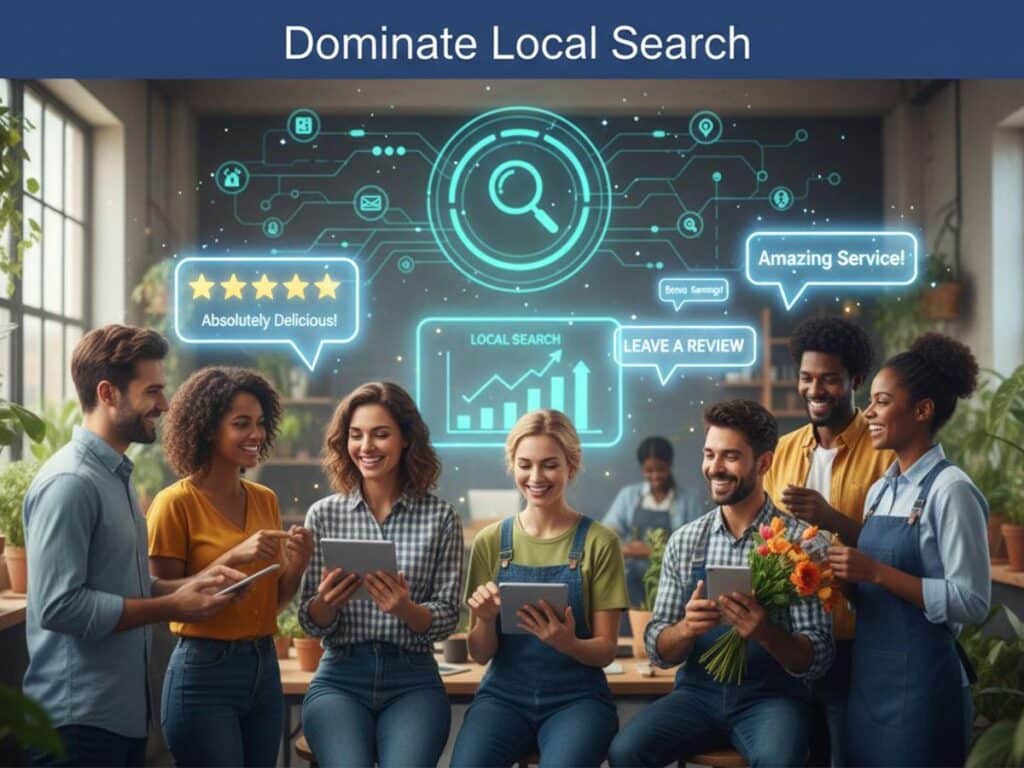
Customer reviews are vital for small business SEO strategies because they boost local visibility, build trust, and improve conversion rates. A proactive review strategy provides social proof and valuable insights for continuous improvement.
What is Customer Review Generation & Management?
Customer review generation involves soliciting feedback via email follow-ups, QR codes, or SMS prompts. Management covers monitoring platforms, responding promptly, and leveraging insights to refine offerings. Aligns with best practices on Online review.
Examples of Successful Implementation
- E-commerce site displaying star ratings in search results, boosting CTR by 18%
- A handyman service achieving a 4.9-star Google Business Profile ranking in the Local Pack
- A restaurant showcasing Yelp badges on its homepage, increasing reservations by 22%
- SaaS startup publishing G2 and Capterra testimonials to build credibility
Actionable Tips
- Send review requests 3–5 days after purchase when satisfaction peaks
- Use QR codes in packaging or receipts to simplify the review process
- Develop response templates for positive feedback and constructive criticism
- Respond to all reviews within 48 hours to show active engagement
- Highlight top reviews on your site with a review widget for social proof
- Avoid incentivizing positive reviews to comply with platform guidelines
Why and When to Use
Implement this strategy to strengthen social proof and enhance local search rankings. Consistent review management drives trust signals and increases conversions.
Get In Touch
8. Mobile SEO & Mobile-First Indexing
With over 60% of global searches on mobile devices, Mobile SEO & Mobile-First Indexing ensure your site performs optimally on smartphones and tablets. Google now crawls the mobile version first—missed content here means missed traffic.
What is Mobile SEO & Mobile-First Indexing?
Mobile SEO designs responsive layouts, optimizes asset loading, and adapts navigation for touch. Mobile-first indexing means Google uses your mobile HTML and CSS for crawling and ranking. If your mobile site lacks content or structure found on desktop, you risk visibility gaps.
Examples of Successful Implementation
- E-commerce platform with one-click mobile checkout saw a 35% increase in orders
- Corporate site with uniform layouts across all screen sizes boosted mobile sessions by 28%
- Local café featuring click-to-call buttons, driving 50% more calls from mobile
- Mobile app integration with web content delivering seamless user experiences
Actionable Tips
- Implement responsive design using one HTML structure and CSS breakpoints
- Set the viewport meta tag correctly for proper scaling
- Use at least 16px font sizes and 44×44 px tappable buttons
- Serve optimized images via
srcsetfor different screen resolutions - Remove intrusive interstitials that block content on mobile
- Simplify navigation with hamburger menus or horizontal scroll
- Test page speed on real devices and Google PageSpeed Insights
- Optimize form fields for mobile input and auto-complete
- Validate touch responsiveness across popular handsets
Why and When to Use
Use Mobile SEO & Mobile-First Indexing when a significant share of your audience browses on smartphones. Ensuring mobile readiness prevents ranking drops, improves engagement, and accelerates conversions.
Additional Resources
- Mobile-first indexing on Wikipedia
- Google PageSpeed Insights
9. Voice Search & Featured Snippets Optimization
This tactic optimizes content for voice assistants and secures featured snippets, capturing zero-click traffic and boosting brand authority.
“By targeting position zero, businesses can answer queries before users scroll organic results.”
What is Voice Search & Featured Snippets Optimization?
Voice search optimization focuses on natural language and question-based queries. Featured snippets provide concise answers at the top of search results. Together, these tactics enhance discoverability on mobile, desktop, and voice platforms.
Examples of Successful Implementation
- Secured a featured snippet for “how to fix a leaky faucet”, generating 1,200 clicks monthly
- Appeared in voice search for “best pizza near me”, driving immediate orders
- FAQ content displayed in Google’s answer box increased on-site time by 25%
- Local store hours and directions read aloud by assistants, improving foot traffic
Actionable Tips
- Target question-based keywords starting with Who, What, When, Where, Why, How
- Write concise 40–50 word answers at the top of each page
- Use numbered lists, bullet points, and tables for snippet-friendly structure
- Add FAQPage schema markup to question/answer sections
- Employ a conversational tone with “near me” variations
- Use header tags to organize each question and answer segment
- Audit existing pages to include snippet-optimized content
Why and When to Use
Use this strategy when voice search queries comprise a meaningful share of your traffic. It drives qualified leads, strengthens brand authority, and captures zero-click opportunities.
Additional Resources
10. Competitive Analysis & Market Positioning
Competitive Analysis & Market Positioning helps you gain intelligence on rivals to refine your own approach. It involves auditing competitor keywords, backlinks, content formats, and technical SEO to identify opportunities and threats.
What is Competitive Analysis & Market Positioning?
Competitive analysis reviews your top 5–10 direct competitors in search results. Market positioning uses those insights to differentiate your brand, target untapped keywords, and craft unique content that outranks others.
Examples of Successful Implementation
- A local plumber benchmarking rivals for “plumber near me” and capturing untapped keywords
- Replicating high-authority backlink sources from national competitors
- Matching competitor content formats proven to engage in your industry
- Targeting competitor keywords you don’t rank for to gain quick wins
Actionable Tips
- Identify 5–10 direct competitors in Google results
- Use SEMrush or Ahrefs to extract their top-ranking keywords
- Audit their backlink profiles and pitch similar sources
- Review on-page SEO elements: titles, meta descriptions, headers
- Map their content calendar: topics, formats, publish frequency
- Monitor competitor rankings monthly to detect shifts
- Run technical audits: site speed, mobile friendliness, indexing
- Create a competitive matrix comparing key SEO metrics
Why and When to Use
Implement competitive analysis when entering a crowded market or launching new services. This approach reveals content gaps, informs keyword strategy, and positions your small business to capture market share.
Additional Resources
- See Competitive analysis on Wikipedia for an overview
- Learn more about Competitive Analysis & Market Positioning on galantstudios.com
Small Business SEO: 10-Point Strategy Comparison
| Strategy | Complexity 🔄 | Resources & Speed ⚡ | Expected Outcomes 📊 | Ideal Use Cases 💡 | Key Advantages ⭐ |
|---|---|---|---|---|---|
| Local SEO Optimization | Low–Medium 🔄 | Low resources; Quick (weeks) ⚡ | Improved local visibility, more foot/phone leads 📊 | Brick-and-mortar & local service businesses 💡 | Targets high-intent locals, cost-effective, review-driven ⭐⭐⭐⭐ |
| Long-Tail Keyword Strategy | Medium 🔄 | Low resources; Gradual (months) ⚡ | More qualified traffic, higher conversion rates 📊 | Small sites, niche products, limited budgets 💡 | Easier to rank, lower CPC, higher intent traffic ⭐⭐⭐ |
| Content Marketing & Topic Clusters | High 🔄 | High resources; Slow (3–6+ months) ⚡ | Topical authority, sustained organic growth 📊 | Thought leadership & lead generation 💡 | Builds authority, multiple entry points, repurposable content ⭐⭐⭐⭐ |
| On-Page SEO Optimization | Low 🔄 | Low resources; Quick impact (days–weeks) ⚡ | Better rankings, higher CTR, improved UX 📊 | Quick wins on existing pages 💡 | Fast, low-cost improvements; immediate SERP benefits ⭐⭐⭐ |
| Link Building & Authority Development | High 🔄 | High resources; Slow (months) ⚡ | Increased domain authority and referral traffic 📊 | Competitive niches, growth-focused businesses 💡 | Strong ranking signal, long-term SEO gains, brand exposure ⭐⭐⭐⭐ |
| Technical SEO Improvements | High 🔄 | Medium–High resources; Medium (weeks–months) ⚡ | Improved crawlability, UX, indexing stability 📊 | Site migrations, legacy/slow/large sites 💡 | Foundation for all SEO, improves speed/mobile rankings ⭐⭐⭐⭐ |
| Customer Review Generation & Management | Low–Medium 🔄 | Low resources; Ongoing with quick impacts ⚡ | Better local rankings, higher trust and conversion 📊 | Local services, retail, hospitality 💡 | Social proof, boosts CTR and conversions, reputation control ⭐⭐⭐ |
| Mobile SEO & Mobile-First Indexing | Medium–High 🔄 | Medium resources; Medium (weeks–months) ⚡ | Improved mobile rankings and conversions 📊 | Mobile-heavy audiences, e-commerce, local search 💡 | Captures majority of search traffic, improves UX on devices ⭐⭐⭐⭐ |
| Voice Search & Featured Snippets Optimization | Medium 🔄 | Low–Medium resources; Medium timeline ⚡ | Position zero, voice traffic gains 📊 | FAQ/how-to pages, local quick-answer queries 💡 | Featured snippet visibility, conversational reach, future-proofing ⭐⭐–⭐⭐⭐ |
| Competitive Analysis & Market Positioning | Medium 🔄 | Medium resources; Quick insights; ongoing ⚡ | Identifies gaps, quick-win opportunities 📊 | Market entry, strategy planning, budget allocation 💡 | Actionable intel, reduces wasted effort, reveals growth opportunities ⭐⭐⭐ |
Get In Touch
Bring Your SEO Plan to Life
You now have ten proven small business SEO strategies to transform local visibility into measurable sales and leads. Here’s how to get started today:
Review and Prioritize Key Tactics
- Local SEO Optimization: Claim and optimize your Google My Business profile (see https://en.wikipedia.org/wiki/Google_My_Business)
- On-Page SEO: Audit title tags, meta descriptions, and header structures for conversion focus
- Technical SEO: Run a site speed test with PageSpeed Insights and fix Core Web Vitals issues
- Customer Reviews: Automate review requests via email or SMS for ongoing social proof
Roadmap to Execution
- Audit Your Site – Use SEMrush or Ahrefs to benchmark current rankings and authority.
- Optimize Google My Business – Add accurate NAP details and high-res photos for a 20% local view boost.
- Target Long-Tail Keywords – Analyze search volume in Google Keyword Planner to capture niche queries.
- Build Topic Clusters – Group blog posts by core themes to increase session duration by 15%.
- Enhance On-Page Elements – Update title tags with primary and secondary keywords following best practices.
- Fix Technical Issues – Resolve 404 errors and implement an XML sitemap to improve crawlability.
- Generate Reviews – Trigger post-purchase review invites and showcase them on-site for social proof.
- Mobile-First Testing – Validate responsiveness using Google’s Mobile-Friendly Test.
- Optimize for Voice Search – Add FAQ schema for conversational queries and featured snippets.
- Develop Authority Links – Outreach to industry blogs with personalized pitches for guest contributions.
Measure Success and Iterate
- Track organic traffic, bounce rate, and goal completions in Google Analytics
- Monitor keyword positions and backlink growth in Ahrefs
- Review local ranking changes weekly in Google Search Console
Key Insight: Consistent tracking fuels continuous improvement and long-term SEO gains.
Regularly revisit and refine your roadmap based on real-time data and market shifts.
Partner with Expert Support
Implementing these small business SEO strategies can feel overwhelming. Galant Studios offers end-to-end SEO services—combining data-driven audits, persuasive content, and ongoing optimization. Leverage our expertise and preferred tools to accelerate your growth and maintain a competitive edge.
Ready to transform your SEO efforts? Partner with Galant Studios for personalized guidance and proven results. Visit Galant Studios to schedule your free consultation and turn local searches into sales today!