Before you run a single ad or post on social media, you must build a solid foundation. Too many businesses chase quick wins that rarely last. The secret to sustainable growth isn’t a tactic; it’s the strategic groundwork: deeply understanding your customer, defining what makes you different, and building a brand that earns trust.
Let’s lay that groundwork.
Building the Foundation for Online Sales Growth
It’s tempting to dive headfirst into the latest marketing trends, but that’s a recipe for wasted money and effort. Real, lasting success in e-commerce comes from a deep understanding of your market, your customer, and your unique place within it. This strategic work ensures every decision you make—from your website’s design to your ad copy—is targeted and effective.
The e-commerce world is massive, and the competition is fierce. The data below paints a clear picture of the scale we’re talking about.
With a market this vast, standing out isn’t optional. It’s essential. A strong foundation is what allows you to cut through the noise and persuade customers to choose you.
Define Your Ideal Customer Profile
The first step is to get laser-focused. Go beyond simple demographics like age and location. True insight comes from understanding your customer’s motivations, their pain points, and what they truly aspire to. This is the difference between knowing who buys from you and knowing why they buy.
Create detailed buyer personas by asking deeper questions:
- What daily frustrations do they face that your product directly solves? For example, a new parent might be frustrated with baby carriers that are difficult to put on alone.
- What core values do they hold that resonate with your brand’s mission? Do they value sustainability, American-made products, or cutting-edge technology?
- Where do they spend time online, and whose opinions do they trust? Are they on TikTok, in niche Facebook groups, or reading specific blogs?
A company selling ergonomic office chairs isn’t just targeting “people who work from home.” Their ideal customer is a professional who experiences back pain after long hours, values their health, and is willing to invest in a long-term solution. This detail transforms your marketing from a generic sales pitch into a compelling solution.
Craft a Powerful Unique Value Proposition
Your Unique Value Proposition (UVP) is your promise to the customer. It’s a crystal-clear statement that answers one critical question: “Why should I buy from you and not your competitor?” It must explain the unique benefit you provide and how you solve their problem better than anyone else.
A weak UVP just describes what you sell: “We sell handmade leather bags.” A powerful UVP highlights a transformative benefit: “Handcrafted from ethically sourced leather, our bags are guaranteed for life, offering timeless style you can pass down for generations.”
The second one communicates quality, durability, and values, creating an emotional connection that a simple feature list can’t match.
Your UVP isn’t just a marketing slogan—it’s the compass for your entire business. It should guide your product decisions, your customer service policies, and every piece of content you create to ensure a consistent, compelling experience.
This foundational work directly impacts crucial website metrics. A clear UVP and a deep understanding of your customer lead to a more intuitive user experience, which is a major factor in site speed and conversions. For a deeper dive, our guide on how to improve website speed can help you optimize that journey.
With the global e-commerce market projected to reach trillions of dollars and fierce competition, a solid foundation isn’t just a nice-to-have; it’s your key to survival and growth.
To bring these foundational concepts together, we’ve created a simple checklist. Think of this as your blueprint for building an e-commerce business that’s truly ready to scale.
Your E-Commerce Growth Checklist
This table summarizes the core pillars needed to build an online store capable of sustained sales growth.
| Pillar | Core Focus | Actionable Example |
|---|---|---|
| Customer Insight | Deeply understanding your target audience. | Create 2-3 detailed buyer personas based on surveys and customer interviews. |
| Brand Identity | Defining what your brand stands for. | Write a clear mission statement and identify 3-5 core brand values. |
| Value Proposition | Articulating what makes you unique. | Craft a one-sentence UVP that highlights a key benefit and differentiator. |
| Website Experience | Ensuring a seamless and fast user journey. | Conduct a site speed audit and identify three areas for immediate improvement. |
| Product-Market Fit | Aligning your product with customer needs. | Collect customer feedback to refine product features or develop a new, requested item. |
Use this checklist to audit your current strategy or to guide your next steps. Getting these elements right from the start will make every subsequent marketing effort more impactful and profitable.
Turn Your Website Into a Sales Engine
Think of your website as your best salesperson—it works 24/7, never takes a break, and can handle thousands of customers at once. But it needs to be engineered to sell. A well-optimized website does more than just display your products; it skillfully guides visitors from casual browsing to a confident purchase.
Too many businesses pour money into getting traffic, only to neglect the user’s journey once they arrive. This is a costly mistake. The smallest bit of friction—a confusing menu, a slow-loading page—can send a potential customer away forever. The mission is to transform your site from a static online brochure into a dynamic, high-performing sales machine.
Simplify Navigation and User Experience
If a customer can’t find what they’re looking for instantly, they will leave. A confused mind never buys. Your site’s structure must be intuitive, predictable, and effortless for the user.
A practical guideline is the “three-click rule”: a user should be able to find any product on your site within three clicks. While not a rigid law, it forces you to simplify. Use clear menu categories with descriptive labels that leave no room for guesswork.
For example, instead of a vague menu item like “Shop,” use specific categories like “Women’s Hiking Boots” or “Kitchen Stand Mixers.” This clarity reduces cognitive load and gets your customers to the right page faster, making them more likely to buy.
Craft Compelling Product Descriptions
Your product descriptions are your sales pitch. Simply listing technical specs is a massive missed opportunity. Your copy must translate features into benefits, showing a customer exactly how your product will solve their problem or improve their life.
Tell a story. A description for a waterproof jacket shouldn’t just say “Gore-Tex fabric with sealed seams.” It should paint a picture: “Caught in a sudden downpour on the trail? Our storm-proof jacket uses advanced Gore-Tex fabric and fully sealed seams to keep you bone-dry and comfortable, so you can finish your hike with confidence.” This speaks directly to the customer’s needs and desires.
Top e-commerce brands have mastered this, especially when it comes to boosting your Amazon conversion rate. The same principles of persuasive, benefit-driven copy apply directly to your own website.
A great product description doesn’t just sell a product; it sells a better version of the customer. It shows them how their life will improve, making the purchase feel like an essential step toward their goals.
Optimize the Checkout Process
The checkout is where sales are won or lost. According to the Baymard Institute, an independent web research company, nearly 70% of online shopping carts are abandoned. The primary culprit is a complicated or untrustworthy checkout process.
Every extra step, every unnecessary form field, is another chance for the customer to have second thoughts. Your goal is to make paying you as easy as possible.
Here are actionable steps to streamline your checkout:
- Offer Guest Checkout: Forcing users to create an account is a major conversion killer. Let them buy as a guest.
- Be Transparent About Costs: Surprise shipping fees are the number one reason for cart abandonment. Display all costs, including shipping and taxes, upfront.
- Provide Multiple Payment Options: Accept major credit cards, digital wallets like Apple Pay and Google Pay, and “Buy Now, Pay Later” services to cater to all preferences.
A smooth, secure checkout builds the trust needed to get a customer across the finish line. These improvements are at the heart of any solid CRO strategy, and you can dive deeper into more conversion rate optimization tips to fine-tune your entire sales funnel.
Attracting Qualified Buyers with SEO and Content
Getting traffic to your website is easy. Attracting visitors who are actively looking to buy is the real challenge. The secret to sustainable growth isn’t just more traffic; it’s the right traffic. This is where a focused search engine optimization (SEO) and content strategy becomes your most valuable asset, acting like a magnet to pull in qualified buyers.

This image visualizes how on-page and off-page SEO elements work together. Your goal is to send strong signals to search engines that your website is a trustworthy and relevant answer to a user’s query.
When you align your content with what potential customers are typing into Google, you stop being an advertiser and start being a problem-solver. This shift builds the authority and trust required to turn a searcher into a customer.
Uncovering Buyer Intent with Keyword Research
Effective SEO starts with understanding the exact language your customers use. The true power of keyword research lies in what it reveals about a person’s intent. You want to connect with people who are on the verge of making a decision.
For example, a broad keyword like “running shoes” attracts many people who are just browsing. But a long-tail keyword like “best stability running shoes for flat feet” signals a serious buyer with a specific problem. This is the traffic that converts.
To find these high-value keywords, think like your customer. Look for phrases that include:
- Problem-based queries: “how to fix a leaky faucet”
- Comparison terms: “Brand X vs. Brand Y coffee maker”
- Product specifiers: “lightweight waterproof hiking boots for women”
- Transactional words: “buy,” “discount,” “deal,” “for sale”
These searches indicate someone is much further down the buying journey.
Building a Content Strategy That Sells
Once you know what your customers are searching for, you must create genuinely useful content that provides the best answer. This content becomes the doorway through which qualified buyers find your brand. A solid plan is essential, and our guide on creating a content marketing strategy template can provide a powerful framework.
Don’t just create product pages. Build a comprehensive resource hub that establishes your expertise.
Your content should be the single most helpful answer on the internet for your target customer’s query. When you achieve this, you not only climb the search rankings but also earn the trust required to close the sale.
Some of the most effective content formats for driving sales include:
- In-Depth Buying Guides: An article like “The Ultimate Guide to Choosing a Laptop for Graphic Design” attracts users who are ready to buy but need expert advice first.
- Product Comparison Articles: Put your product head-to-head with competitors. Be honest and highlight where you truly excel. This builds immense trust.
- Case Studies and Success Stories: Show potential customers how others have solved their exact problem using your products. It’s the ultimate form of social proof.
This strategic approach positions your brand as a helpful expert, not just another online seller.
The Role of Platform and Distribution
Where you sell matters. Your e-commerce platform and distribution strategy play a critical role in your reach. Projections show that by 2025, there will be over 28 million online stores globally.
A few major players dominate this space: Shopify powers 29% of online stores, followed by Wix (20%) and Woocommerce (17%). Each has its own strengths and SEO capabilities, so understanding your platform is key to maximizing visibility.
By combining precise keyword targeting with content that truly helps people, you create a sustainable engine for bringing in qualified buyers who are looking for exactly what you have to offer.
Turning First-Time Buyers into Lifelong Customers with Email Marketing
Getting the first sale is a victory, but real, sustainable growth comes from earning the second, third, and tenth. Your biggest opportunity isn’t chasing new leads; it’s in your existing customer base. Email marketing is your direct line to build loyalty and drive repeat business.
Unlike the volatile algorithms of social media or the rising costs of paid ads, your email list is an asset you own. It’s a reliable channel to build genuine relationships, recover lost sales, and announce new products to your most engaged audience—without paying for every impression.
Put Your Relationship-Building on Autopilot
The most effective email strategies work for you 24/7. By setting up automated sequences, or “flows,” you can connect with customers at critical moments in their journey. These automated campaigns work tirelessly in the background to boost your sales.
For any online store, these three automated flows are non-negotiable:
- The Welcome Series: This is your chance to make a killer first impression. A powerful welcome series does more than offer a discount; it shares your brand story, showcases your best-selling products, and sets expectations. It’s your opportunity to build a real connection from day one.
- The Abandoned Cart Flow: We’ve all added items to a cart and then gotten distracted. An automated email sent a few hours later can recover a significant amount of that lost revenue. A simple reminder, perhaps addressing a common question about shipping or returns, is often all it takes to bring them back.
- The Post-Purchase Follow-Up: The journey doesn’t end at checkout. A great post-purchase email confirms the order, provides tracking information, and, crucially, asks for a review. A couple of weeks later, another automated email can suggest related products, smoothly turning a one-time transaction into a long-term relationship.
The Magic of Speaking Directly to Your Customers
Blasting the same generic email to your entire list is a surefire way to be ignored. The real power of email is unlocked with segmentation—grouping your audience based on their behavior and purchase history. This allows you to send highly relevant offers that feel like personal recommendations, not mass marketing.
Think of segmentation as having a one-on-one conversation, but at scale. When a customer receives an email that reflects their interests and past actions, they feel seen and valued. That’s the bedrock of true brand loyalty.
For instance, create targeted segments for:
- First-time buyers to nurture them toward a second purchase.
- VIP customers who get early access to sales and exclusive products.
- Customers who bought a specific product, allowing you to cross-sell a perfect accessory. For example, someone who bought a coffee machine gets an email about premium coffee beans.
- Subscribers who’ve gone quiet to send a special “we miss you” offer to win them back.
This targeted approach ensures your messages matter to the people receiving them, which leads to better open rates, more clicks, and more sales.
This isn’t just a niche strategy; it’s a global expectation. A staggering 85% of global consumers now shop online. By 2025, that number is expected to grow to nearly 2.77 billion people. You can discover more insights about the scale of digital commerce and see why this matters. In such a massive market, personalization isn’t a luxury—it’s essential.
Scaling Your Reach with Smart Advertising
Organic growth is powerful, but it takes time. When you’re ready to accelerate sales and scale quickly, paid advertising is the fuel for that growth. This isn’t about blindly throwing money at platforms; it’s a calculated strategy to get your products in front of qualified buyers and drive immediate action.
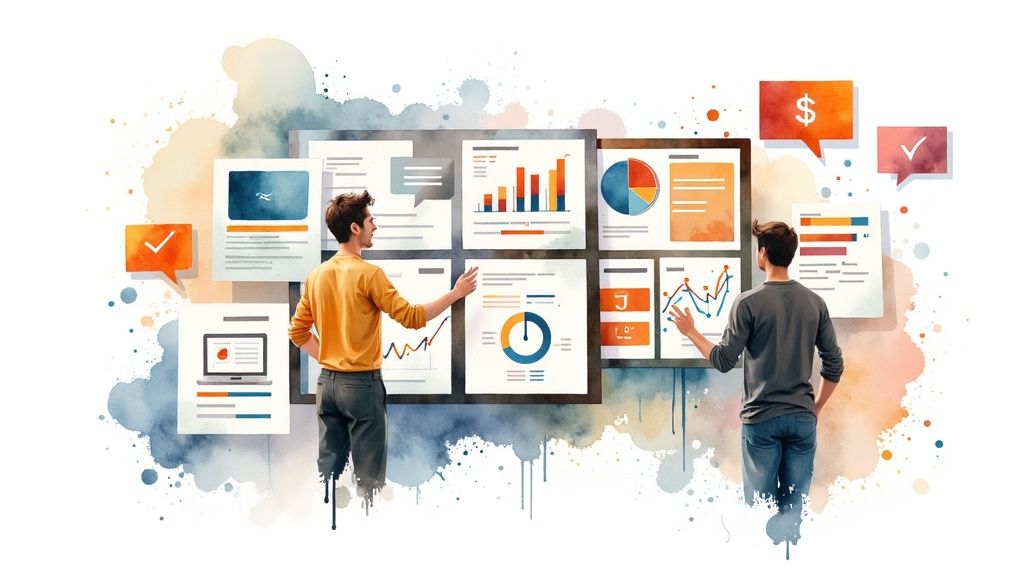
Think of smart advertising as finding the right people, at the perfect moment, with a message that resonates. The goal is to turn your advertising spend into a predictable, profitable source of revenue.
Master Precision Audience Targeting
The single biggest mistake in paid advertising is poor targeting. You can have brilliant creative and an irresistible offer, but if you show it to the wrong people, your campaign will fail.
Platforms like Google Ads and Meta (Facebook and Instagram) offer incredibly granular targeting options. This is where you get surgically precise.
You can target users based on their online lives:
- Interest Targeting: Find people who follow pages or show interest in topics directly related to your products, like “sustainable fashion” or “homebrewing equipment.”
- Behavioral Targeting: Target users based on their online actions, such as recent purchases, travel habits, or even the type of device they use.
- Lookalike Audiences: This is one of the most powerful tools available. Upload a list of your best customers, and the platform’s algorithm will build a new audience of people who share similar characteristics. You’re essentially cloning your ideal buyers.
This precision is how you make every dollar count.
The Art of Retargeting Lost Customers
A potential customer visits your site, adds a product to their cart, and then vanishes. They were this close. Retargeting is your second chance to close that sale.
By placing a small tracking pixel on your website, you can serve specific, relevant ads to those visitors as they browse other sites or scroll social media. The key is to be strategic, not repetitive.
Effective retargeting isn’t about repeating yourself; it’s about continuing the conversation. Remind them of the exact product they viewed. Offer a small, limited-time discount to overcome price hesitation. Show them testimonials from happy customers who bought that same item.
This tactic keeps your brand top-of-mind and provides the gentle nudge needed to complete the purchase, recovering what would otherwise be lost revenue.
Beyond Ads: Build a Community
Social media shouldn’t just be an advertising billboard. It’s a place to build a genuine, engaged community that trusts and advocates for your brand. While ads drive initial sales, a loyal community fuels long-term, sustainable growth.
Focus on creating content that offers real value, not just a sales pitch. Share behind-the-scenes glimpses of your business, post expert tips related to your niche, and actively engage with every comment and message. When you foster this relationship, your followers transform from passive customers into active brand champions.
This community-first approach also makes your sales efforts far more effective when you do run them.
Make Shopping Seamless with Social Commerce
To capitalize on your social media presence, you must remove all friction between discovery and purchase. This is what social commerce features like Instagram Shopping and Facebook Shops are designed for.
These tools let you tag products directly in posts, stories, and reels. A follower can see a product they love, tap to see the price, and click through to buy—all within seconds, without leaving the app.
By integrating your product catalog with these platforms, you turn your social profiles into interactive storefronts. This strategy meets customers where they already are, making it incredibly easy for them to act on the impulse to buy. It’s one of the most direct ways to increase online sales today.
Turning Strategy Into Sustainable Sales Growth
We’ve covered mastering SEO, optimizing your website, launching ad campaigns, and building an email marketing engine. Now, the real work begins: weaving these threads into a cohesive system where each part amplifies the others.
Sustainable growth isn’t born from a single campaign; it comes from a commitment to continuous improvement. Adopt a cycle of testing, measuring, learning, and refining. This iterative process is what separates temporary sales spikes from consistent, predictable growth.
Where to Start for Maximum Impact
Focus on actions that will deliver the most significant results with your current resources.
- Audit Your Checkout: This week, find and eliminate at least one point of friction in your checkout process. Could you remove a form field or make shipping costs clearer?
- Launch a Retargeting Campaign: Bring back those “window shoppers.” A simple, focused retargeting ad reminding them of what they viewed can deliver an immediate return.
- Segment Your Email List: Start small. Create one new segment, like “first-time buyers,” and send them a tailored welcome campaign designed to encourage a second purchase.
The ultimate goal is to build a well-oiled machine where your SEO efforts feed your email list, your paid ads spotlight your best content, and your website effortlessly converts qualified traffic into loyal, repeat customers.
For a deeper dive, exploring specific tactics to increase sales on Shopify can give you a more focused, platform-specific game plan. Consider this your roadmap to building a business that doesn’t just grow, but lasts.
Frequently Asked Questions
As you work to grow your e-commerce business, questions are bound to come up. Here are answers to the most common ones, with practical advice to help you drive more revenue.
How Quickly Can I Actually See More Sales?
The honest answer: it depends on your tactics. For quick wins, you can see a bump in sales within a few weeks. Simple fixes like streamlining your checkout process or running a sharp retargeting ad campaign can produce results almost immediately.
For real, lasting growth, you need to play the long game with strategies like Search Engine Optimization (SEO) and content creation. These efforts build a powerful, self-sustaining source of organic traffic. You’ll typically start seeing a meaningful impact in three to six months. The best approach is a mix of short-term boosts and a solid long-term vision.
What Is the Single Most Important Metric to Watch?
While traffic and bounce rate are useful, your conversion rate is the number that truly matters for sales. This metric tells you what percentage of your visitors are actually buying something.
Think about it: high traffic is worthless if no one converts. By focusing on improving your conversion rate—through better copy, a simpler checkout, or faster page speed—you make more money from the traffic you already have. Even a small increase, like going from a 1% to 2% conversion rate, literally doubles your sales without a single extra visitor.
Do I Need a Huge Advertising Budget to Compete?
No, but you need a smart one. The key is to start with a modest, tightly controlled budget aimed at a very specific audience.
For example, a small budget dedicated to a Facebook retargeting campaign can be incredibly powerful. You’re showing ads only to people who have already visited your site, which makes them far more likely to buy. Once you see a positive Return on Ad Spend (ROAS), you can reinvest those profits to methodically scale your campaigns.
A small, well-managed advertising budget that targets a warm audience will almost always outperform a large, unfocused budget. Start small, prove the concept, and scale responsibly.
How Often Should I Be Emailing My Customer List?
The perfect email frequency depends on your industry and audience, but a common mistake is not emailing enough. A good starting point is to connect with your subscribers at least once a week. This keeps your brand top-of-mind and builds a consistent relationship.
That said, quality will always trump quantity. A weekly email packed with genuine value—like exclusive offers, new product announcements, or helpful tips—will always perform better than daily, generic blasts. Keep a close eye on your open rates and unsubscribe numbers; your audience will tell you if you need to adjust your timing.
At Galant Studios, we turn your digital presence into a powerful sales engine with expert SEO and website optimization. Let us help you attract more qualified buyers and build sustainable growth. Learn more at galantstudios.com.