While your on-page SEO lays the groundwork, true search engine dominance is won beyond your website’s borders. Off-page SEO is the art and science of building your site’s authority, credibility, and reputation across the entire web. Think of it as earning digital word-of-mouth. These external signals tell search engines like Google that your content is not just relevant, but also trustworthy and valuable—a resource worth ranking at the top.
This process is more than just link building; it’s a holistic strategy that includes everything from guest blogging on industry-leading sites to managing your brand’s reputation on review platforms. It’s what separates a well-built website from an authoritative one that consistently captures the top spots. If you want to build a sustainable competitive advantage, mastering this off page seo checklist isn’t just a good idea—it’s your roadmap to growth.
Here, we’ll transform theory into action, breaking down eight critical strategies with practical, step-by-step instructions. You’ll learn how to launch effective campaigns in:
- High-Quality Backlink Building
- Guest Blogging and Content Contribution
- Social Media Engagement and Social Signals
- Brand Mentions and Unlinked Citations
- Influencer Outreach and Relationship Building
- Local SEO and Citation Building
- Content Syndication and Republishing
- Online Reputation Management and Review Generation
Whether you’re a seasoned marketer looking to sharpen your skills or a business owner starting your SEO journey, this guide provides the clarity you need to dramatically boost your online visibility and drive profitable organic traffic.
1. High-Quality Backlink Building
At its core, backlink building is the practice of earning hyperlinks from other websites to your own. Each link from a credible, relevant site acts as a powerful “vote of confidence.” It’s a direct signal to search engines that your content is a trusted authority worth recommending. This isn’t just a tactic; it remains one of the most influential ranking factors and the foundation of any powerful off-page SEO checklist.
When done right, a smart backlink strategy can deliver game-changing results. For example, Brian Dean of Backlinko famously used his “Skyscraper Technique”—creating content that’s significantly better than what’s currently ranking and then reaching out to sites linking to the inferior content—to boost his organic traffic by 110% in just 14 days. This demonstrates that one great “linkable asset” can achieve more than hundreds of low-quality links.
How to Implement a Backlink Strategy
Success isn’t about collecting the most links; it’s about earning the right links. Focus your energy on acquiring links that pass genuine authority and relevance.
- Create “Linkable Assets”: Stop writing generic blog posts. Instead, invest in creating resources that people need to reference. Think original research reports, free industry tools, comprehensive guides, or compelling infographics. A prime example is the Digital Economy and Society Index (DESI) from the European Commission, which earns thousands of links from news outlets and research institutions because it provides unique, authoritative data.
- Master Broken Link Building: Use a tool like Ahrefs to find dead links on authoritative websites in your niche. Contact the site owner, let them know about the broken link, and kindly suggest your relevant, up-to-date resource as the perfect replacement. You’re solving a problem for them, which makes this a highly effective, win-win tactic.
- Leverage Help A Reporter Out (HARO): HARO is a free service connecting journalists with expert sources. By providing a sharp, insightful quote for a story, you can earn editorial links from major news publications and high-authority blogs, building credibility fast.
- Keep Your Anchor Text Natural: Avoid over-optimizing with exact-match keywords. A healthy, natural link profile should be diverse: roughly 70% branded or naked URLs (e.g., “YourBrand” or “www.yoursite.com“), 20% generic phrases (e.g., “learn more here”), and only about 10% target keywords.
For a deeper dive into crafting a successful campaign, you can learn more about developing a robust link building strategy.
The infographic below highlights the key metrics to monitor when evaluating the quality of your backlink profile.
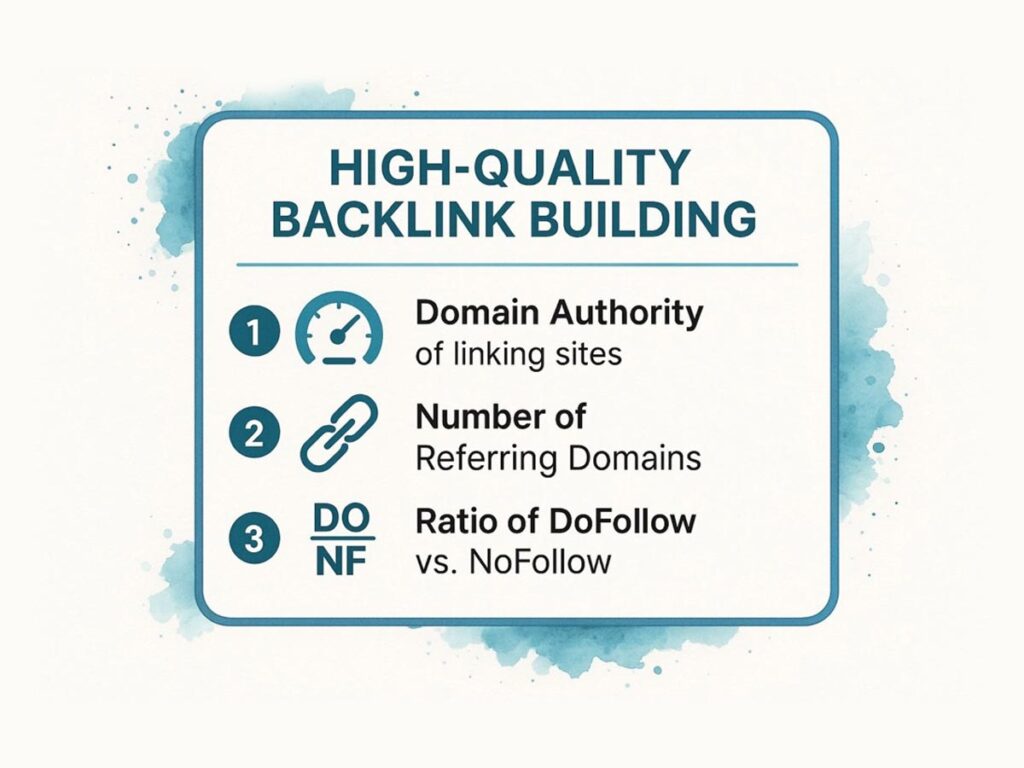
This data underscores the importance of not just acquiring links, but acquiring the right links from a diverse set of authoritative and relevant domains. For a more detailed explanation of link building principles, the following video provides expert insights.
2. Guest Blogging and Content Contribution
Guest blogging is the art of writing and publishing articles on other authoritative websites in your niche. It’s a triple-win strategy: you build your brand’s authority, tap into a new and engaged audience, and earn powerful contextual backlinks. By sharing your expertise on established platforms, you position yourself as a thought leader and drive highly qualified referral traffic directly to your site.

A well-executed guest blogging campaign can be a massive growth lever. When Buffer was starting out, co-founder Leo Widrich wrote around 150 guest posts. This single strategy was the primary driver that helped them acquire their first 100,000 users. It proves that guest blogging isn’t just about links—it’s a powerful tool for customer acquisition and brand building.
How to Implement a Guest Blogging Strategy
The most successful guest bloggers focus on providing immense value to the host site’s audience. It’s about contribution, not just self-promotion.
- Target High-Impact Publications: Don’t just look for any site that accepts guest posts. Identify websites with a highly engaged audience that mirrors your ideal customer profile. A practical way to find them is with Google search operators like
"your industry" + "write for us"or"your topic" + "contribute an article". - Pitch Unique, Actionable Ideas: Never pitch a generic or rehashed topic. Research the site’s existing content and identify a gap you can fill. Pitch an article that offers a fresh perspective, original data, or a step-by-step solution to a pressing problem their readers face.
- Craft a Compelling, Personalized Pitch: Editors are busy. Your outreach email needs to stand out. Address the editor by name, reference a recent article they published, and clearly articulate the value your proposed post will bring to their readers. A concise outline of your article can make it an easy “yes.”
- Optimize Your Contribution Strategically: Embed one or two natural, contextual links to relevant, non-promotional resources on your own site. This link should add value to the reader, not just serve your SEO goals. For those in the fashion niche, exploring guest blogging insights can further enhance your content contribution strategy.
- Track Everything: Use a simple spreadsheet to track your outreach: sites you’ve pitched, topics proposed, submission status, and publication dates. Staying organized is the key to scaling this tactic as a core part of your off page seo checklist.
3. Social Media Engagement and Social Signals
Social media engagement is about building a community and driving conversations on platforms like X (formerly Twitter), LinkedIn, Instagram, and Facebook. These activities generate “social signals”—likes, shares, comments, and saves—that tell search engines your content is resonating with real people. While not a direct ranking factor, strong social signals strongly correlate with better search performance. Why? Because viral content gets seen by more people, earning natural backlinks and boosting brand recognition.
This makes social media an indispensable part of a modern off page SEO checklist. Consider Dollar Shave Club’s legendary launch video. It went viral, racking up millions of views and earning thousands of high-authority backlinks from major news outlets. The social buzz directly fueled its SEO success. It’s a perfect example of how social proof amplifies content and builds authority at scale.

How to Implement a Social Media Engagement Strategy
Success on social media comes from genuine interaction and value creation, not just broadcasting your latest blog post. Your goal is to build an audience that actively wants to share your content.
- Create Platform-Native, Shareable Content: Don’t just copy and paste the same message everywhere. Tailor your content for each platform. For LinkedIn, create a professional infographic with key industry stats. For Instagram, turn a key takeaway into a visually striking Reel. The more native the content feels, the more likely it is to be shared.
- Encourage and Monitor Engagement: Make sharing effortless by adding prominent social share buttons to your blog posts. Use social listening tools to monitor brand mentions in real-time. Responding quickly to comments and questions shows you’re engaged and helps build a loyal following.
- Use Hashtags Strategically: Think of hashtags as SEO keywords for social media. Use two to three highly relevant hashtags to increase discoverability. Research what tags are trending in your niche but avoid overly broad ones where your content will get lost in the noise.
- Engage with Industry Leaders and Influencers: Don’t just post—participate. Share valuable content from others in your industry (and credit them). Leave thoughtful comments on their posts. This builds relationships and puts your brand on the radar of key players.
This video from marketing expert Neil Patel offers further insights into leveraging social media for SEO.
4. Brand Mentions and Unlinked Citations
Brand mentions are online references to your company, products, or key people—even without a hyperlink. These “unlinked citations” are hidden gems for off-page SEO. Search engines like Google are smart enough to associate mentions with your brand, viewing them as signals of authority and relevance. Actively finding these mentions and converting them into links is one of the most efficient ways to boost your SEO.
This isn’t just a theory; it’s a proven tactic. For example, SEO software company Ahrefs ran a campaign to reclaim its unlinked brand mentions and successfully converted 15% of them into high-quality backlinks. This single strategy allows you to capitalize on the brand equity you’ve already built, turning passive mentions into active SEO assets. It’s the definition of low-hanging fruit in your off page seo checklist.
How to Implement a Brand Mention Strategy
A successful approach requires a system for monitoring mentions and a smooth outreach process to turn them into valuable links.
- Set Up Systematic Monitoring: Use tools like Brand24, Mention, or the free Google Alerts to get real-time notifications whenever your brand name, products, or executives are mentioned online. This transforms your strategy from reactive to proactive.
- Prioritize High-Value Opportunities: Not all mentions are created equal. Focus your outreach efforts on unlinked mentions from high-authority, relevant websites. A link from a respected industry blog is worth far more than one from an unknown directory.
- Craft a Simple, Friendly Outreach Email: Don’t overcomplicate it. Send a polite email to the site owner or editor. Thank them for mentioning your brand, point out the specific location, and kindly ask if they would consider adding a link to your site so their readers can learn more.
- Track Your Outreach and Follow Up: Use a spreadsheet to track who you’ve contacted. If you don’t hear back in a week, send a brief, friendly follow-up. A gentle nudge is often all it takes to get the link added.
For a deeper understanding of how citations work, particularly for local businesses, you can learn more about building local citations and their impact.
This process not only strengthens your backlink profile but also helps you manage your online reputation. By staying on top of what people are saying about you, you can engage with your audience, address feedback, and discover new opportunities for growth.
5. Influencer Outreach and Relationship Building
Influencer outreach is the process of strategically connecting with industry experts and thought leaders to build mutually beneficial relationships. This isn’t about paying for a shout-out; it’s about genuine collaboration. These connections can lead to high-authority backlinks, powerful social media amplification, and enhanced brand credibility in the eyes of both users and search engines.
This strategy has been a growth engine for countless brands. ConvertKit, an email marketing platform, grew its revenue exponentially by partnering with influential bloggers who became authentic advocates for the product. They didn’t just buy ads; they built a community of trusted voices. This proves that leveraging an influencer’s credibility can be one of the fastest ways to build trust for your own brand.
How to Implement Influencer Outreach
An effective strategy is built on genuine connection and mutual value, not transactional asks. The goal is to build long-term partnerships that yield organic benefits over time.
- Start with Micro-Influencers: Instead of chasing superstars, focus on influencers with 10,000 to 100,000 followers. They often have higher engagement rates and a more dedicated community, making their endorsement more impactful and their collaboration more accessible.
- Engage Before You Pitch: The “cold pitch” is dead. Before you ask for anything, build rapport. Follow them on social media, share their content (with your own insightful commentary), and leave thoughtful comments on their blog posts. Show you’re a genuine fan of their work.
- Personalize Your Outreach: Ditch the generic templates. Your outreach email should prove you’ve done your homework. Reference a specific piece of content they created or a recent accomplishment. To successfully build these key relationships, implementing effective influencer marketing outreach strategies is paramount.
- Propose a Clear Win-Win: When you do make contact, clearly articulate what’s in it for them. Offer something of value—exclusive content for their audience, free access to your product, or a co-creation opportunity. Start with a small ask, like a social share, before suggesting a backlink or bigger collaboration.
For a deeper understanding of how these partnerships can elevate your brand’s presence, you can learn more about the fundamentals of building brand awareness.
6. Local SEO and Citation Building
For any business with a physical location, local SEO is non-negotiable. It’s the process of optimizing your online presence to capture customers from relevant local searches like “plumber near me.” A cornerstone of this is citation building: ensuring your business’s Name, Address, and Phone number (NAP) are listed consistently and accurately across the web. This is a critical part of an off page SEO checklist because it directly impacts your visibility in Google’s coveted Local Pack and on Maps.
Success here translates directly into more customers through your door. For example, a local dental practice that focused on building consistent citations and generating positive reviews saw its rankings in the Google Local Pack increase by over 400%, leading to a direct increase in new patient bookings. These results show that a focused local strategy delivers a powerful return on investment.

How to Implement a Local SEO and Citation Strategy
A winning local strategy is built on three pillars: accuracy, consistency, and trust. Your goal is to make it incredibly easy for both Google and potential customers to find and trust your business.
- Master Your Google Business Profile (GBP): Your GBP is your most powerful local SEO asset. Claim and meticulously complete your profile with accurate information, high-quality photos, correct business categories, and regular posts to keep customers engaged.
- Achieve Absolute NAP Consistency: Your Name, Address, and Phone number must be identical everywhere online. Even a tiny variation like “St.” vs. “Street” can confuse search engines and dilute your authority. Do an audit and fix every inconsistency.
- Build Foundational and Niche Citations: Start with the big players: list your business on major data aggregators and directories like Apple Maps, Yelp, and Bing Places. Then, get listed in industry-specific directories (e.g., Avvo for lawyers, Houzz for home contractors) to build topical relevance.
- Generate and Manage a Stream of Reviews: Actively encourage happy customers to leave reviews on your Google Business Profile. Just as importantly, respond professionally to all feedback—positive and negative. This shows you’re engaged and care about customer experience.
- Earn Local Backlinks: Strengthen your geographic authority by earning links from other local businesses, the local chamber of commerce, community event sponsorships, and local news outlets.
For a deeper understanding of how Google ranks local businesses, you can learn more about its local ranking factors.
The video below offers an expert tutorial on mastering Google Business Profile, a central pillar of any effective local SEO campaign.
7. Content Syndication and Republishing
Content syndication is the strategic practice of republishing your original articles on authoritative third-party websites. It’s a powerful way to amplify your content’s reach, introducing it to established audiences you couldn’t access on your own. When done correctly, syndication builds your brand, drives referral traffic, and demonstrates expertise, making it a smart addition to your off page seo checklist.
This strategy is a favorite of major brands and thought leaders. For example, HubSpot frequently syndicates its expert content to major publications like Business Insider, reaching millions of additional readers and cementing its status as an industry authority. This allows them to maximize the ROI of every piece of content they create by leveraging the massive distribution channels of their partners.
How to Implement a Content Syndication Strategy
A successful syndication strategy focuses on proper attribution to avoid duplicate content penalties. The goal is to gain exposure without harming your original article’s ranking.
- Let Your Original Article Get Indexed First: Always wait at least one to two weeks after publishing a piece on your own site before syndicating it. This gives search engines plenty of time to crawl and index your URL as the original, canonical source.
- Insist on a Canonical Tag: This is the gold standard. A
rel="canonical"tag on the syndicated article points back to your original URL, telling search engines to pass all SEO authority and ranking signals to your page. It’s the cleanest way to syndicate content. - If You Can’t Get a Canonical, Demand Clear Attribution: If a canonical tag isn’t possible, ensure the publisher includes a clear attribution link, such as, “This article was originally published on [Your Website],” linking directly back to your post.
- Choose Relevant, High-Authority Platforms: Don’t just syndicate anywhere. Focus on partners whose audience aligns perfectly with your target customer. A guest post on a respected industry blog will drive far more qualified traffic than a mention on a generic news site.
- Monitor and Engage: Keep an eye on the performance of your syndicated content. Which platforms drive the most referral traffic? Be sure to monitor and respond to comments on these external sites to engage with your new audience and build your brand’s authority.
8. Online Reputation Management and Review Generation
Online reputation management is the proactive process of monitoring, influencing, and managing how your brand is perceived online. A huge part of this is actively generating positive reviews and responding to all customer feedback. A strong, positive reputation not only convinces customers to buy but also acts as a powerful ranking signal for local SEO and boosts your click-through rates from search results.
This is a vital part of any off page SEO checklist because Google wants to rank businesses that customers trust. Think about it: Amazon’s entire platform is built on reviews. Products with more positive reviews consistently rank higher. The same principle applies to local businesses. Improving an average star rating from three to four stars can increase conversions by over 270%, proving the direct link between reputation and revenue.
How to Implement Reputation Management
A proactive and systematic approach is key. The goal is to build a positive feedback loop that encourages good reviews while professionally handling negative ones.
- Systematize Your Review Requests: Don’t leave reviews to chance. Implement an automated process to ask satisfied customers for a review via email or SMS, typically 24-48 hours after a successful purchase or service. This captures their feedback while the positive experience is fresh.
- Make Leaving a Review Effortless: Remove all friction. Provide customers with a direct link to your most important review profile, whether it’s Google Business Profile, Yelp, or an industry-specific site. The easier you make it, the higher your conversion rate will be.
- Respond to All Feedback—Fast: Aim to respond to every review, positive or negative, within 24 hours. A simple “thank you” for a positive review reinforces customer loyalty. A professional, empathetic response to a negative review shows you value feedback and can often turn a bad experience around.
- Monitor Your Brand Everywhere: Use reputation management tools like BrightLocal or ReviewTrackers to keep track of mentions and reviews across the web. This ensures you never miss a chance to engage with a customer or address an emerging issue before it escalates.
- Leverage Review Schema Markup: Implement review schema on your website. This enables rich snippets (the star ratings you see in search results), which can dramatically increase your click-through rate by providing an immediate visual signal of your quality and trustworthiness.
For clear guidelines on ethically soliciting online reviews, you can refer to the guidance from the Federal Trade Commission.
Off-Page SEO Strategy Comparison of 8 Key Tactics
| Strategy | Implementation Complexity 🔄 | Resource Requirements ⚡ | Expected Outcomes 📊 | Ideal Use Cases 💡 | Key Advantages ⭐ |
|---|---|---|---|---|---|
| High-Quality Backlink Building | High – ongoing effort, monitoring needed | High – time, outreach, content creation | Strong SEO rankings, domain authority growth | Competitive niches, long-term organic growth | Long-term SEO value, referral traffic, credibility |
| Guest Blogging and Content Contribution | Moderate – content creation & outreach | Moderate – writing, pitching effort | Targeted referral traffic, authority building | Niche expertise showcase, audience expansion | Builds authority, networking, editorial backlinks |
| Social Media Engagement and Social Signals | Moderate – consistent posting and interaction | Moderate to high – content, monitoring | Increased brand visibility and referral traffic | Brand awareness, real-time engagement | Immediate traffic, content amplification, viral potential |
| Brand Mentions and Unlinked Citations | Low to moderate – monitoring and outreach | Moderate – tools and outreach effort | Brand awareness, potential backlink acquisition | Reputation management, brand authority assessment | Converts mentions into backlinks, organic endorsements |
| Influencer Outreach and Relationship Building | High – personalized engagement required | High – time, possible budget for collaborations | High-quality backlinks, social proof, traffic | Authority boost, content collaboration, social amplification | Access to engaged audiences, credibility via association |
| Local SEO and Citation Building | Moderate – ongoing citation management | Moderate – listings, reviews, content | Local search dominance, increased foot traffic | Businesses with physical locations, local services | High local conversion, trust via reviews, local visibility |
| Content Syndication and Republishing | Low to moderate – content adaptation and relationship management | Low to moderate – syndication agreements | Expanded reach, referral traffic | Brand awareness, content ROI maximization | Reaches new audiences, multiplies content impact |
| Online Reputation Management and Review Generation | Moderate – continuous monitoring and responses | Moderate – tools and response management | Improved local SEO, higher conversion rates | Customer-facing businesses, local SEO focus | Builds trust, impacts local ranking, improves CTR |
Integrating Your Off-Page SEO for Maximum Impact
Completing an off page seo checklist isn’t about ticking off isolated tasks. It’s about conducting an orchestra of signals that work together to build your brand’s authority and trust. As we’ve seen, these strategies are deeply interconnected. Success comes not from doing them in a vacuum, but from weaving them into a single, cohesive digital marketing strategy.
Each tactic amplifies the others. A great guest post doesn’t just earn a backlink; it also generates brand mentions and drives social signals when it’s shared. A successful influencer collaboration can lead to authentic reviews, which in turn boosts your online reputation and local SEO. This synergy creates a powerful, self-reinforcing cycle of credibility and visibility that is incredibly difficult for competitors to overcome.
From Checklist to Cohesive Strategy
To make the leap from a list of tactics to an integrated strategy, you need a shift in mindset. Instead of viewing link building as a transaction, see it as relationship building. Instead of seeing social media as a broadcast channel, see it as a community forum. This strategic approach ensures your efforts are sustainable and focused on creating genuine value for your audience.
Key Insight: A successful off-page SEO strategy is not a series of one-off campaigns. It is a continuous, integrated effort focused on building authority, fostering relationships, and managing your brand’s digital reputation across the entire web.
This mindset protects you from the temptation of chasing short-term gains with low-quality tactics, which can ultimately destroy your site’s reputation with Google. By focusing on ethical, value-driven methods, you’re not just optimizing for today’s algorithm; you’re building a resilient brand that will thrive for years to come.
Actionable Next Steps: Implementing Your Off-Page SEO Checklist
Ready to move from theory to action? Prioritize your efforts based on your current resources and goals. A new local business might focus first on mastering its Google Business Profile and generating its first 50 reviews. An established B2B brand might prioritize content syndication and high-level influencer outreach.
Here are your immediate next steps:
- Conduct a Brand Audit: Use monitoring tools to find all existing brand mentions online. Start by reclaiming the “low-hanging fruit”: reach out and kindly ask webmasters to add a link to any unlinked mentions.
- Perform a Competitive Backlink Analysis: Use a tool like Ahrefs or SEMrush to analyze the backlink profiles of your top three competitors. Where are they getting their best links from? This will give you a roadmap of high-authority sites to target.
- Start Your Outreach Small: Identify five relevant, non-competing blogs in your niche. Before pitching them, spend two weeks genuinely engaging with their content. Then, send a highly personalized guest post pitch that solves a specific problem for their audience.
- Automate Your Review Generation: Implement a simple, automated process to request reviews from happy customers. A follow-up email after a purchase that links directly to your Google Business Profile can work wonders.
Mastering this off page seo checklist is a strategic imperative for any business serious about long-term online growth. It is the engine that builds digital authority, expands your reach far beyond your own website, and solidifies your position as a trusted leader in your industry. By consistently applying these principles, you transform your online presence from a passive website into an active, influential force that attracts customers and commands respect.
Navigating the complexities of a comprehensive off-page SEO strategy requires expertise and dedicated resources. If you are ready to transform this checklist into a powerful engine for growth, the team at Galant Studios specializes in building authoritative, results-driven SEO campaigns. Visit Galant Studios to see how we can help you build a dominant online presence.