Imagine local directory listings as digital signposts scattered across the internet, each one pointing eager customers directly to your business. Far from being a simple online phonebook, these listings are powerful assets for local visibility and the bedrock of customer trust. In today’s competitive market, getting them right isn’t just an option—it’s your key to winning the local game.
What Are Local Directory Listings and Why Should You Care?

At its core, a local directory listing is a public profile containing your business’s essential details: name, address, phone number, and hours. These profiles appear on countless online platforms—from search engine giants to niche industry websites—acting as crucial reference points for both potential customers and search algorithms.
Think of it like this: You wouldn’t rely on a single flyer to promote a grand opening. You’d post them all over town where people will see them. Local directory listings work the same way. Every accurate, consistent listing you create on a trusted site like Google Maps, Yelp, or your local chamber of commerce website is another signpost, making it easier for customers to find you.
The Power of a Unified Presence
When you have many of these listings working together, they create a powerful, unified online footprint. When a customer searches for “emergency plumber near me,” search engines like Google scan these directories to deliver the most relevant and trustworthy results. Businesses with numerous accurate listings are seen as more credible, which is why they are far more likely to appear at the top of local search results.
This is profoundly important as local searches now dominate how consumers find businesses. The impact is staggering; for example, between 2021 and 2022, businesses that distributed their listings to more than 10 online directories saw their local search visibility climb by an impressive 91% in just 13 months.
The Bedrock of Success: NAP Consistency
The foundation of any successful local directory strategy is NAP consistency. This simple acronym is your golden rule:
- Name: Your official business name, exactly as it appears on your legal documents.
- Address: Your physical street address, formatted identically every time.
- Phone Number: Your primary business phone number.
Think of your NAP as your business’s digital fingerprint. If that fingerprint is identical across every platform, search engines can confidently verify your business exists where you say it does. But when inconsistencies appear—like using “St.” on one site and “Street” on another—it creates confusion. This erodes trust with search engines and can seriously damage your rankings. For a deeper dive, you can explore more general information on directory listings.
Actionable Insight: A consistent and accurate presence across multiple directories is one of the strongest signals you can send to search engines that your business is a legitimate local entity. It builds authority and directly converts into more calls, visits, and sales from local customers.
How Directory Listings Fuel Your Local SEO Success
It’s easy to dismiss local directory listings as just another online phonebook, but their connection to your search engine ranking is much deeper. They aren’t just entries in a database; they are critical data points that search engines like Google use to verify your business exists, is relevant to a search, and is a prominent fixture in your local area.
Imagine every accurate Name, Address, and Phone number (NAP) listing on a reputable directory as a trusted local figure vouching for you. In the world of SEO, this “vouch” is called a citation. When search engine crawlers find dozens of these consistent citations, they build trust that your business is a real, active part of the community. This trust is the absolute bedrock of local SEO.
Building Credibility Through Citations
A single listing on an obscure website proves nothing. But when your business details appear consistently across trusted platforms—from giants like Yelp and Apple Maps to niche industry sites—it paints a picture of credibility that search engines can’t ignore.
This collection of authoritative votes signals to Google that your business is stable and well-established. The more high-quality and consistent your citations are, the more confident search engines become in showing your business to people searching for your services. This directly boosts your chances of ranking for those critical, location-based searches that drive sales.
Securing Your Spot in the Google Local Pack
One of the most valuable pieces of real estate on the internet for a local business is the Google Local Pack. This is the box at the top of the search results showing a map and three prime business listings for queries like “best pizza near me” or “auto repair in Denver.”
Actionable Insight: Getting into the Local Pack is a game-changer, driving a massive increase in calls, website clicks, and foot traffic. A strong, consistent citation profile is a primary factor Google’s algorithm weighs when deciding who gets featured.
Google uses data from other directories to cross-reference its own information. If your NAP is identical everywhere, it reinforces the accuracy of your Google Business Profile, making you a much stronger candidate for this coveted placement. To truly capitalize on this, you must learn more about how to optimize Google My Business so it works hand-in-hand with your directory strategy.
The Power of Link Equity and Website Authority
Beyond just verifying your location, local directories offer another powerful SEO advantage: link equity. Most directory profiles include a field for your website URL. While not all of these backlinks are created equal, links from authoritative, well-established directories pass a portion of their credibility on to your site.
These backlinks slowly build your website’s overall domain authority. A higher authority score helps your site rank better for all kinds of keywords, not just local ones. Here’s a practical example:
- You get listed: Your new dental practice creates a profile on a high-authority directory like Yellow Pages or Foursquare.
- You gain a backlink: That profile contains a link pointing back to your practice’s website.
- Authority is passed: The directory’s credibility lends a small but meaningful boost to your site’s authority.
- Rankings improve: Over time, as you collect these authoritative links, your website starts to outrank local competitors for valuable search terms like “cosmetic dentistry” in your city.
This multi-pronged effect—building trust with citations, boosting Local Pack visibility, and growing website authority—is how directory listings become a true engine for your local SEO success.
Choosing the Right Directories for Maximum Impact
With so many local directories available, it’s easy to feel overwhelmed. A common mistake is the “scattergun” approach—trying to get listed everywhere. This drains your time and resources for very little return.
The smarter strategy is to focus on quality over quantity. Ask yourself: where are my customers actually looking? A single, well-optimized listing on a directory trusted in your industry is worth more than a dozen profiles on generic, low-traffic sites. By being selective, you invest your energy where it will genuinely boost visibility and bring in new business.
Prioritizing Your Directory Efforts
Think of building your online presence like constructing a pyramid. You start with a wide, solid base of foundational platforms that every business needs. Then, you add layers of specialized, niche directories that speak directly to your ideal customer. This tiered approach helps you build a powerful online presence efficiently.
This hierarchy is the key to structuring your efforts, starting with the essentials before moving to more targeted platforms.
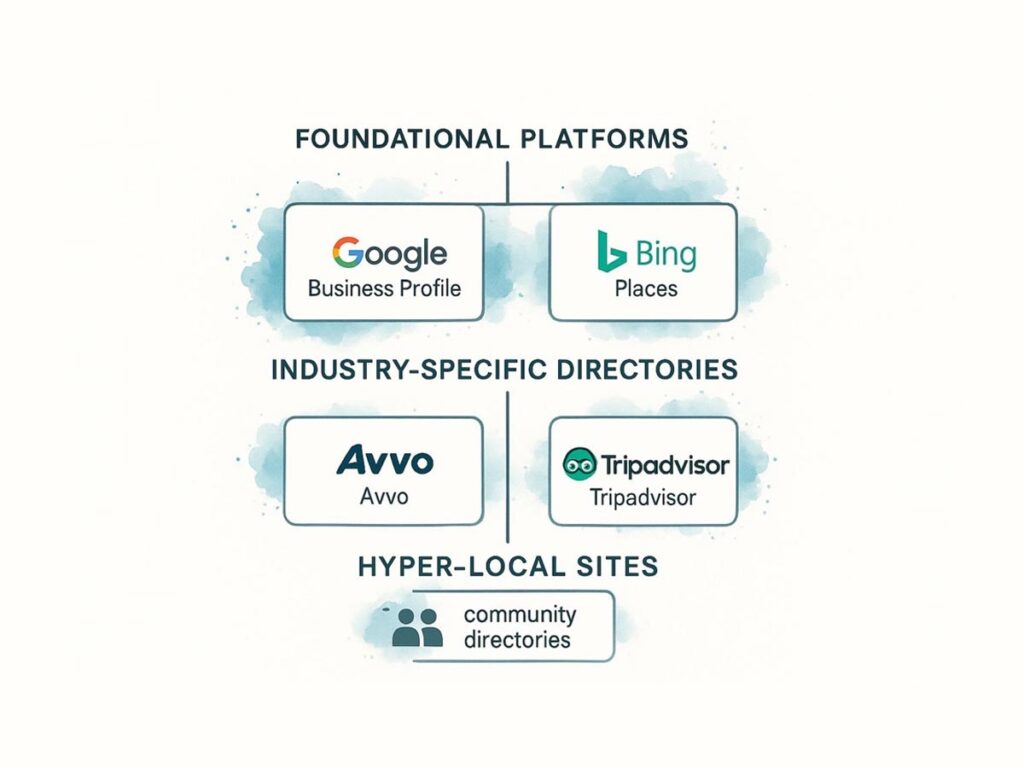
As the graphic shows, your core profiles support everything else, while the industry and local directories give you specialized, targeted reach. Let’s break down what belongs in each of these critical tiers.
The Foundational Platforms
These are your non-negotiables. They form the bedrock of your online presence and are the first place both customers and search engines look for information. Getting these right is your top priority.
Google Business Profile (GBP): If you do nothing else, do this. GBP is the single most important local listing, directly impacting how you appear in Google Search and on Google Maps. An optimized profile is your ticket to appearing in the highly coveted “Local Pack.”
Bing Places for Business: As the world’s second-largest search engine, Bing holds a significant share of search traffic. A complete Bing Places profile ensures you’re visible to millions of users, especially those using Microsoft devices and services.
Apple Maps: With every iPhone user defaulting to Apple Maps for directions, being accurately listed here is vital. It’s how you capture on-the-go mobile searches and voice searches through Siri, like “find a coffee shop near me.”
Actionable Insight: Treat these foundational profiles as the primary source of truth for your business online. Search engines constantly cross-reference data from other directories against these core listings to verify your information is correct.
Industry-Specific Directories for Targeted Reach
With a solid foundation in place, it’s time to get targeted. The next step is to find the directories that are authorities in your field. These niche platforms are where serious, qualified customers go to find specialized services, making them incredibly powerful for generating high-quality leads.
Practical Examples:
- A law firm must be listed on Avvo.
- A hotel or restaurant can’t afford to ignore TripAdvisor.
- A home remodeling contractor gains immense value from a profile on Houzz.
Being listed on these sites puts you directly in front of an audience actively seeking your expertise. They often include industry-specific features—like client reviews, project portfolios, or direct booking integrations—that dramatically improve your ability to convert a visitor into a customer.
The Power of Hyper-Local Directories
The final layer is about building deep community trust. These are hyper-local directories—think your local Chamber of Commerce website, community news portals, or neighborhood business associations. A listing here sends a powerful signal to search engines that you are a legitimate, active part of your local community.
While these sites might not have massive traffic, their local authority carries significant weight for SEO. To find them, try searching “business directory [Your City]” or “[Your Town] chamber of commerce.” These hyper-local listings anchor you to your community and can be the deciding factor for customers who prioritize supporting local businesses.
To help you prioritize, the table below breaks down the different directory types.
A Strategic Comparison of Local Directory Types
| Directory Type | Examples | Primary SEO Value | Best For |
|---|---|---|---|
| Foundational | Google Business Profile, Bing Places, Apple Maps | High authority, core NAP validation, direct impact on map and search rankings | All local businesses, without exception |
| Industry-Specific | TripAdvisor, Avvo, Houzz, Zocdoc | High relevance, qualified referral traffic, strong topical authority signals | Businesses in specialized fields (e.g., hospitality, legal, medical, home services) |
| General/Aggregator | Yelp, Yellow Pages, Foursquare | Broad visibility, citation volume, consumer reviews | B2C businesses with physical locations, especially in retail, food, and entertainment |
| Hyper-Local | Chamber of Commerce, local news sites, community portals | Geographic relevance, community trust signals, backlinks from local authorities | Any business wanting to strengthen its connection to a specific city or neighborhood |
This comparison makes it clear: a balanced approach is best. Start with the foundational platforms, then strategically layer on the industry-specific and hyper-local directories that will connect you with your ideal customer.
Claiming and Optimizing Your Business Listings

Simply existing on local directories isn’t enough. The real opportunity begins when you take full control of these digital storefronts. Many platforms automatically generate basic profiles for businesses, often filled with incomplete or outdated information. This is why claiming and optimizing your listings is so critical.
Think of claiming a listing as raising your hand and saying, “This business is mine.” It’s the official process of verifying your ownership, which hands you the keys to edit and manage the profile. This single step is fundamental to ensuring your information is accurate and transforming a static mention into a dynamic tool that actively brings in customers.
The Claim and Verification Process
Before you can polish your profile, you have to find and claim it. This means hunting down all existing listings, including any inaccurate “ghost” profiles you didn’t create. The process is straightforward but requires diligence.
- Conduct a Thorough Search: Start by searching your business name on major platforms like Google, Yelp, and Bing. Try different variations of your name and address to catch any stray listings.
- Initiate the Claim: Most directories have an obvious button like “Claim this business” or “Is this your business?” Clicking it will kick off the verification process.
- Verify Your Identity: To prove you’re the owner, you might get an automated phone call with a PIN, an email, or—most commonly with Google—a postcard mailed to your physical business address. This final step confirms you are legitimately tied to that location.
Actionable Insight: Once verified, you have the power to fix errors, respond to reviews, and enrich your profile with compelling details that turn searchers into customers. It’s your first step into active online reputation management.
Turning a Basic Listing Into a Customer Magnet
An optimized listing is more than just a name and address. It’s a rich, detailed snapshot of your business designed to answer a customer’s questions and build immediate trust. Every field you fill out helps both people and search engines understand exactly what you do. For a deep dive, our guide on local business listing optimization covers it all.
Your goal is to leave no field empty and present your business in the most professional and appealing way possible.
Core Optimization Techniques
Start with the essentials every potential customer looks for.
- Write a Compelling Business Description: This is your digital elevator pitch. Clearly describe what you do, what makes you unique, and who you serve. Weave in relevant keywords naturally. For example, instead of just “Bakery,” write “Artisan sourdough bakery in downtown Springfield specializing in organic breads and custom cakes.”
- Select Strategic Service Categories: Be specific. Instead of a generic “Contractor,” choose precise options like “Kitchen Remodeling,” “Bathroom Renovation,” and “Deck Building.” This helps directories match you with highly relevant searches.
- Upload High-Resolution Photos and Videos: Visuals tell a story. Post quality images of your storefront, team, products, and finished projects. A profile rich with images is far more engaging and trustworthy.
In fact, businesses with fully optimized profiles—complete with images and detailed descriptions—receive a staggering 520% more views than those with bare-bones listings. The data makes it clear: these enhanced features are no longer optional.
Advanced Engagement Strategies
Once your foundation is solid, use interactive features to engage directly with your audience. This signals to everyone that your business is active and responsive.
- Utilize Google Posts: This feature on your Google Business Profile is like a mini-blog. Use it to share updates, special offers, events, and new products directly in the search results.
- Manage the Q&A Section: Don’t wait for customers to ask questions. Proactively add common questions and your own answers to the Q&A section of your profiles. This lets you control the narrative and provide helpful information upfront.
- Encourage and Respond to Reviews: Actively ask satisfied customers for a review. Even more importantly, respond to all reviews, both positive and negative. This shows you value customer feedback and are committed to service.
Optimization isn’t a “set it and forget it” task. Regularly adding new photos and responding to reviews tells both algorithms and customers that your business is current and relevant.
Building Trust with Flawless NAP Consistency
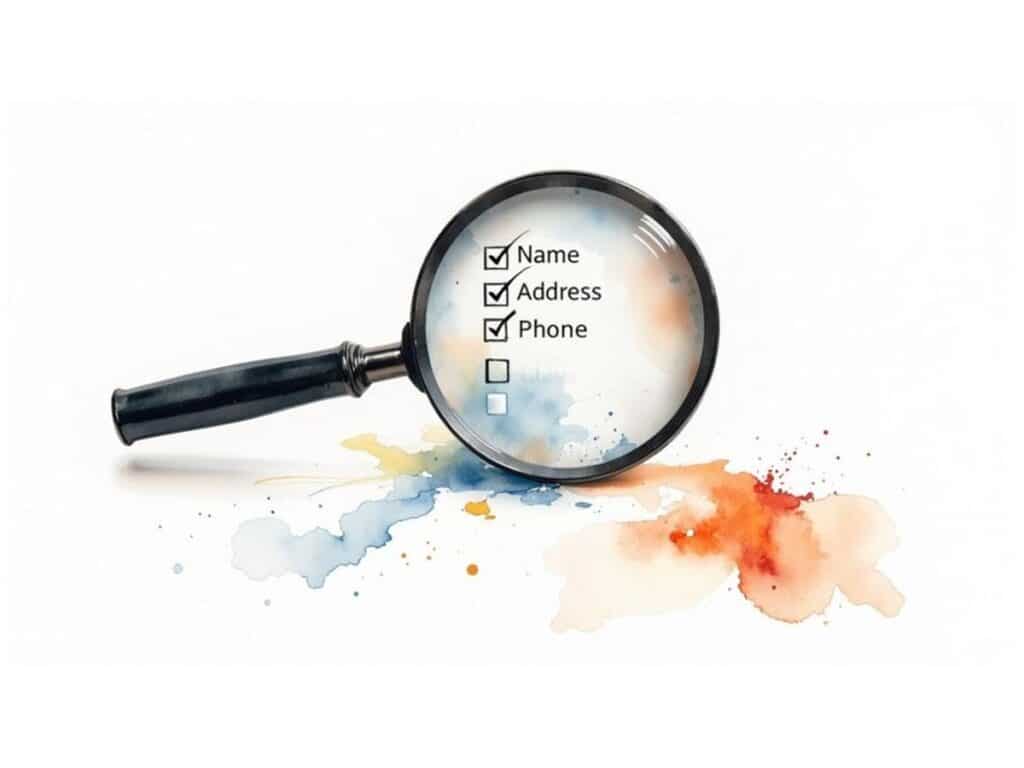
In local SEO, nothing builds trust with search engines like absolute consistency. The real magic happens when every single directory listing presents a perfectly unified picture of your business. This all comes down to maintaining flawless NAP consistency.
NAP is the acronym for your business Name, Address, and Phone number. Think of it as your business’s digital fingerprint. Search engines use this core data to verify that your business is real and located where you say it is. When your NAP is identical everywhere, it sends a powerful signal to Google: “This business is legitimate and trustworthy.”
But even the smallest error plants a seed of doubt. Listing “Acme Inc.” on one site and “Acme Incorporated” on another creates confusion. So does using “St.” instead of “Street” or having an old phone number on one listing. These inconsistencies erode search engine confidence in your data, which can directly harm your local rankings.
The High Cost of Inconsistent Information
The stakes are surprisingly high. Studies show that businesses with complete, consistent citations can achieve up to 25% more visibility in local search results compared to those with conflicting information. When local listings are left unmanaged, experts estimate that data is inaccurate about 8% of the time, leading to frustrated customers and lost business.
These mistakes often pop up after normal business changes—moving offices, getting a new phone number, or rebranding. If you forget to update every single online directory, that old, incorrect data can linger for years, undermining all your other SEO efforts.
Actionable Insight: Every incorrect citation is more than a typo; it’s a crack in your digital foundation. A search engine’s job is to provide reliable information. If it can’t confidently verify your details, it will favor a competitor it can trust.
Conducting a Citation Audit to Restore Order
The first step to achieving perfect NAP harmony is to conduct a citation audit. This is a methodical process of finding every online mention of your business to identify and fix any inaccuracies.
Here’s a practical, step-by-step approach to get started:
- Establish a Single Source of Truth: Before you do anything, decide on the one official version of your NAP. Write it down. This exact format—from the business name down to the suite number—is what you’ll use for every update.
- Manually Search for Your Business: Go to Google and search for different variations of your business name, old addresses, and past phone numbers. Track every listing you find in a simple spreadsheet.
- Use Citation Audit Tools: To speed things up and uncover hidden listings, you can use automated tools. Services from platforms like Moz or BrightLocal are designed to scan the web for your citations and generate a report flagging inconsistencies.
- Claim and Correct Listings: With your list in hand, start claiming each incorrect profile. You’ll need to verify ownership before you can edit the information and align it with your official NAP.
This process can be time-consuming, but it’s essential for a solid local SEO foundation. For those looking to dive deeper into citation management, our detailed article on https://galantstudios.com/local-citations-building/ offers more advanced strategies. Remember, ensuring your business name is consistent—a process that begins with crafting unique business names—is the cornerstone of building trust.
Your Local Directory Questions, Answered
Even with a solid plan, the world of local directory listings can feel a bit confusing. Let’s tackle some of the most common questions business owners ask, breaking them down into simple, practical answers.
How Long Until My Listing Updates Go Live?
This is a great question, but the answer isn’t a single number. The time it takes for your changes to show up online varies quite a bit from one platform to another.
On major players like Google Business Profile, you’ll see changes to essential details—like your hours or phone number—go live very quickly, often within minutes or a few hours. These platforms are built for speed.
However, many smaller directories and data aggregators only refresh their data weekly or even monthly. Because of this lag, it can take anywhere from one to three months for your new information to be reflected consistently across the entire web.
Actionable Insight: The best approach is to update your most important listings first (Google, Bing, Apple) and then have patience as the changes ripple out. Your consistent, accurate information will get everywhere eventually.
Should I Ever Pay for a Directory Listing?
This comes up a lot, and the answer is: it depends entirely on the directory’s quality and who it reaches. Not all paid listings are created equal, so you need to be strategic.
Investing in a premium profile on a high-traffic, industry-specific site can be a fantastic move. Think about a contractor paying for a featured listing on Houzz or a lawyer on Avvo. These paid spots often unlock powerful features, such as:
- Better visibility in that site’s internal search results.
- The ability to add more photos, videos, or detailed project galleries.
- Access to lead generation tools like direct messaging or quote request forms.
On the flip side, be very skeptical of unsolicited emails from obscure directories promising a “guaranteed SEO boost” for a fee. Your first and most important job is to fully claim and optimize your free listings on major platforms like Google, Yelp, and Bing. These will almost always give you the best return on your time.
What’s the Difference Between a Directory and a Data Aggregator?
Understanding this is key to managing your listings efficiently. Let’s use a simple analogy: think of it as retail versus wholesale.
Local directories (like Yelp or TripAdvisor) are the “retail stores.” They’re the consumer-facing websites and apps where customers actually find you. You manage these listings one by one.
Data aggregators (like Foursquare) are the “wholesalers.” These massive databases collect, clean, and distribute your business information to hundreds of other smaller directories, apps, and GPS services. They act as a central source of truth for a huge network of other platforms. A smart strategy uses both:
- You directly manage your key “retail” listings to engage with customers.
- You ensure your information is correct with the “wholesale” aggregators to achieve broad data consistency.
How Much Do Customer Reviews on These Sites Really Matter?
Customer reviews are incredibly important, and they work for you in two major ways. First, they provide powerful social proof that helps a potential customer choose you over a competitor. The U.S. Small Business Administration emphasizes reputation as a core part of marketing, and a steady stream of recent, positive reviews is one of the most persuasive tools you have.
Second, search engines like Google pay close attention to review signals. They look at the number of reviews you have, your average rating, and how frequently you get new ones. Businesses that actively encourage and respond to feedback are often rewarded with better visibility in local search results. In the end, managing your online reputation is just as crucial as managing your business address and phone number.
Ready to stop guessing and start turning local searches into loyal customers? Galant Studios specializes in building a powerful, consistent online presence that drives real growth. With over 8 years of experience, our team knows what it takes to help businesses like yours rank higher and attract more attention.
Discover how our SEO services can elevate your business today.